Lawn care · Winter damage
Snow Mould in Oshawa, and Why the Plow Pile Decides Where It Lands
Snow mould in Oshawa is not really a weather problem, because this town does not get the winter the worst of the two fungi needs. It is a placement problem. The grey patches turn up where somebody put the snow, and that is a decision made in November rather than a verdict handed down in March.
The leaves are the other half of it. See what a fall cleanup actually removes.
Green in summer. Clear in winter.
The short answer
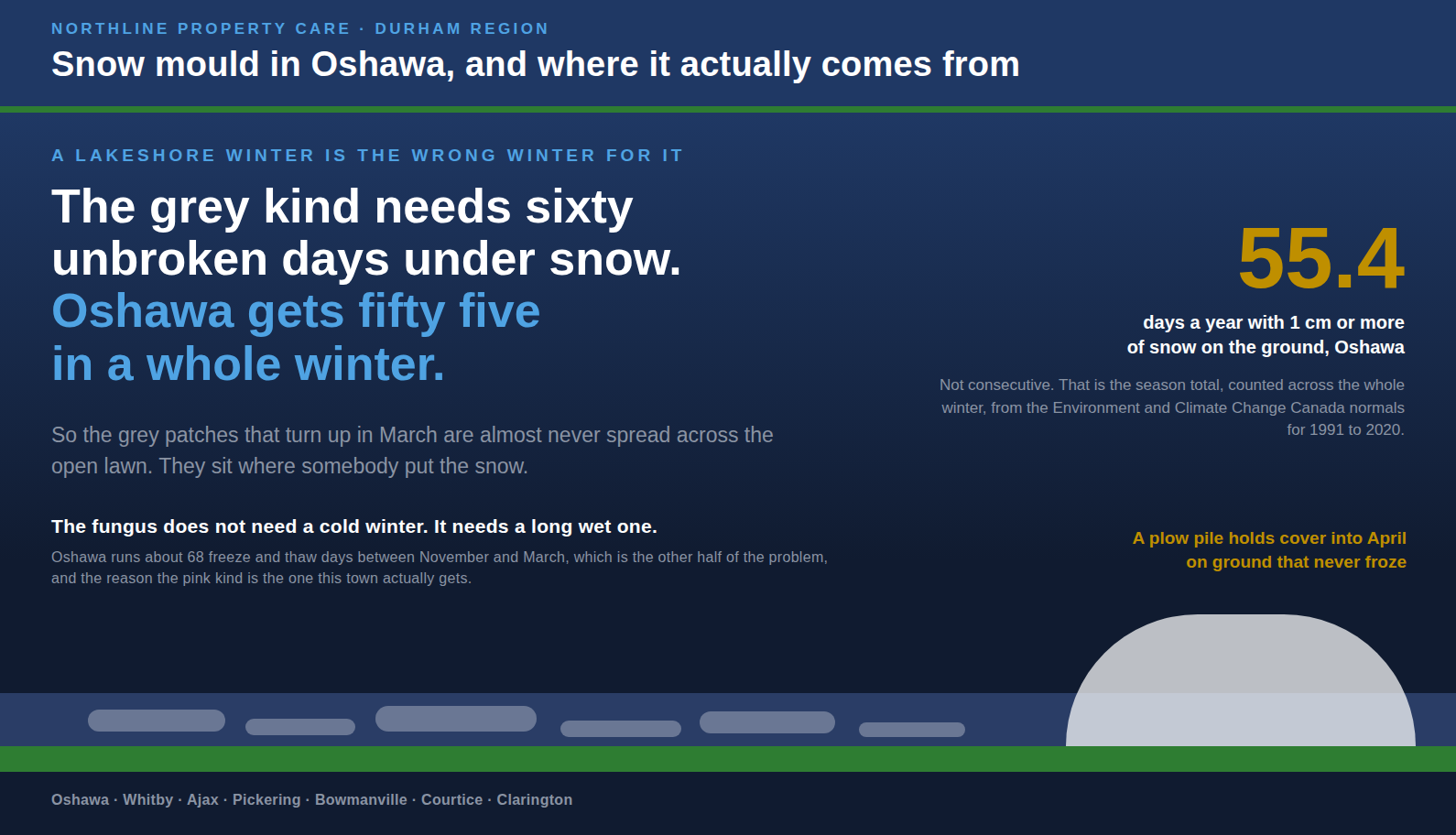
There are two fungi behind this and only one of them is an ordinary Oshawa problem. Pink snow mould needs no snow at all, only weeks of cold wet weather, and this lakeshore hands it about sixty eight freeze and thaw days between November and March. Grey snow mould needs roughly sixty consecutive days under cover on ground that never froze, and Oshawa does not supply that on open lawn. It supplies it in exactly one place: under the pile where the driveway snow was put. So if the damage is spread thinly over the whole lawn it is almost certainly pink, it is almost certainly foliar, and the lawn will come back on its own. If it is a hard grey scar in one corner, look at where the snow went.
Two fungi, one name, and the difference decides what you do
Everybody calls it snow mould and there are at least three organisms wearing the name. Telling them apart is not pedantry. It is the difference between raking a lawn in April and reseeding one.
Pink snow mould is Microdochium nivale, and it does not need snow. That is the fact almost every article on this subject leaves out. The University of Massachusetts turf program records that it is not confined to snow covered turf and can occur whenever the weather is cool and humid, and the Pacific Northwest Plant Disease Management Handbook, a joint publication of Oregon State, Washington State and the University of Idaho, names periods of alternating snow and melt as the condition it likes best. It runs from about freezing up to somewhere between 13 C and 15 C, fastest just above zero. The patch is small, usually five to thirty centimetres, water soaked at first, then tan or bleached with a ring of pink at the edge. The pink develops once light hits it. Under the snow the same fungus is white.
Grey snow mould is Typhula incarnata, and speckled snow mould is Typhula ishikariensis, and both of them are prisoners of the calendar. They need a long spell of unbroken cover over soil that has not frozen. The University of Wisconsin-Madison extension puts the requirement at more than sixty days of snow lying on unfrozen ground with soil temperatures just above freezing. Purdue Extension bulletin BP-101-W is more useful still, because it gives a scale rather than a threshold: mild symptoms after forty to sixty days of cover, moderate damage between sixty and ninety, and severe outbreaks past ninety.
The tell that separates them is visible without a lab, and it is the best piece of amateur diagnosis available on a lawn. Get down on the patch and look at the dead blades. Grey snow mould leaves sclerotia behind, which are hardened survival bodies. Wisconsin describes those of Typhula incarnata as reddish brown and roughly 1.6 to 4.8 mm, and those of Typhula ishikariensis as black, under 1.6 mm, and looking like flakes of pepper scattered across the leaf. Pink snow mould leaves nothing of the kind. If you can see pepper on the grass, you have the grey family. If you cannot, and there is a rose coloured edge to a small tan patch, you have the pink one.
Only one of the three is a serious threat to the plant. Wisconsin states plainly that Typhula ishikariensis is the one that kills the crown, and that turf carrying it often has to be replanted, while turf carrying Typhula incarnata usually recovers on its own once growth resumes. Purdue says the same thing in different words. Pink snow mould sits awkwardly between the two and the sources genuinely disagree about it, which is covered further down.
What the Oshawa station record does to that sixty day number
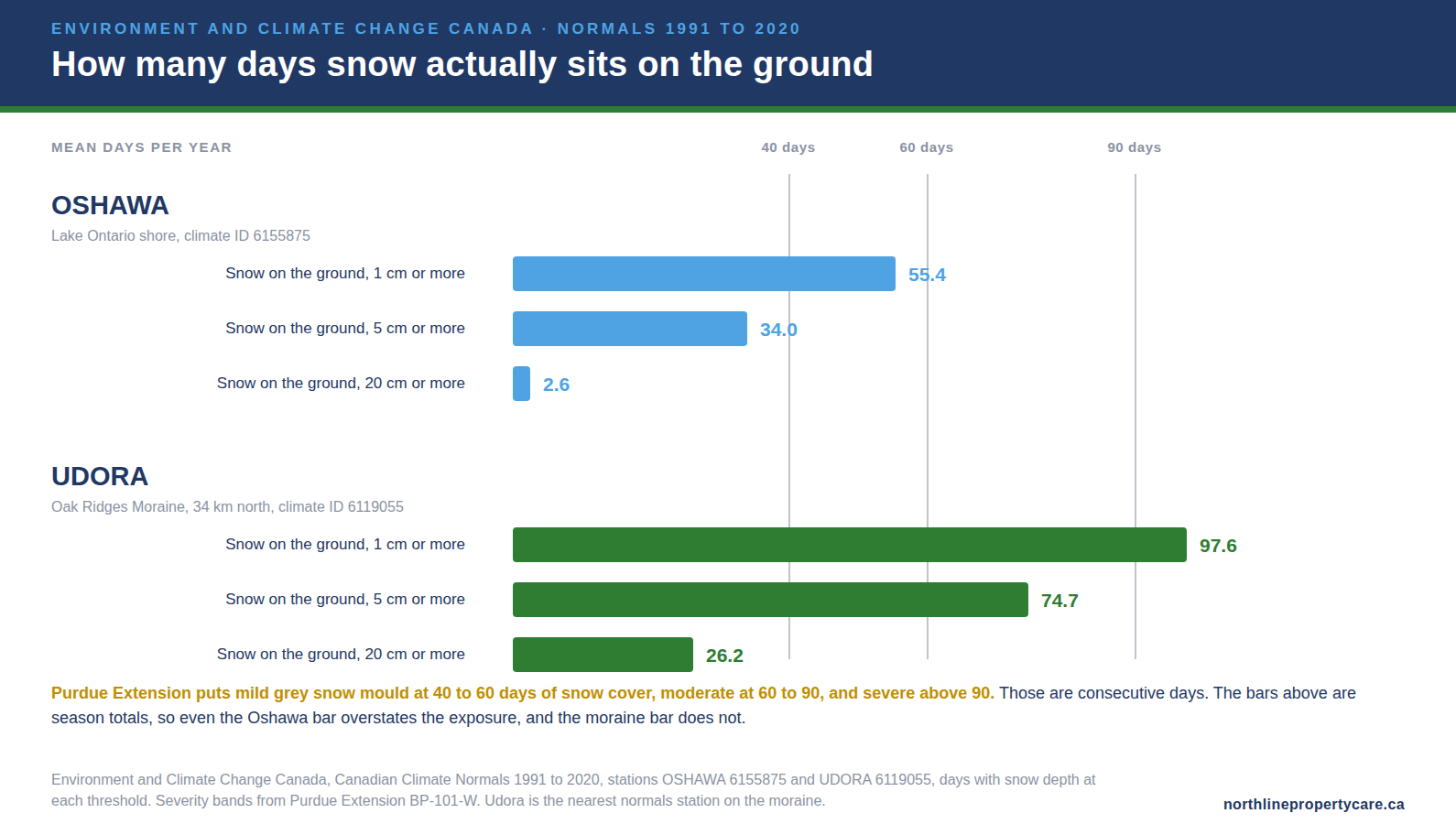
Oshawa averages 55.4 days a year with at least a centimetre of snow on the ground, and that figure is the season total rather than a run. It comes from the Environment and Climate Change Canada climate normals for 1991 to 2020 at the Oshawa station, climate identifier 6155875. Days with five centimetres or more: 34.0. Days with twenty centimetres or more: 2.6. Median snow depth peaks at five centimetres, in February, and is zero in both November and April.
Put that beside Purdue's scale and the arithmetic is not close. A lawn needs sixty consecutive days under cover before grey snow mould does moderate damage. Oshawa cannot assemble sixty days of cover in a whole winter, let alone sixty in a row, and the season total flatters the real exposure because it counts scattered days as though they were continuous. The open lawn in this town is structurally the wrong habitat.
Drive thirty four kilometres north and it becomes a different disease. Udora sits on the Oak Ridges Moraine and is the nearest station to the Blackstock and Enniskillen country with a full set of normals. The same agency, the same thirty years: 97.6 days with a centimetre or more, 74.7 days with five centimetres or more, and 26.2 days with twenty centimetres or more against Oshawa's 2.6. Annual snowfall 167.3 cm against 101.7 cm. January mean daily temperature minus 7.2 C against minus 5.0 C. That is the same regional map, one short run inland, and the moraine sits in Purdue's severe band while the lakeshore never reaches the mild one.
The other half of the Oshawa number is the freezing and thawing, and it is what makes the pink fungus the local one. The same normals table gives 130.1 days a year with a minimum at or below zero and 46.7 days with a maximum at or below zero. Subtract one from the other and you get the days that cross the line in both directions. Between November and March that comes to about 68.5. The method is arithmetic on a published table rather than a published figure, and it is stated that way on purpose. A lawn that thaws and refreezes that often is wet, cold and uncovered for weeks at a stretch, which is the precise description of what Microdochium nivale wants.
The pile is the only part of your lawn having a real winter
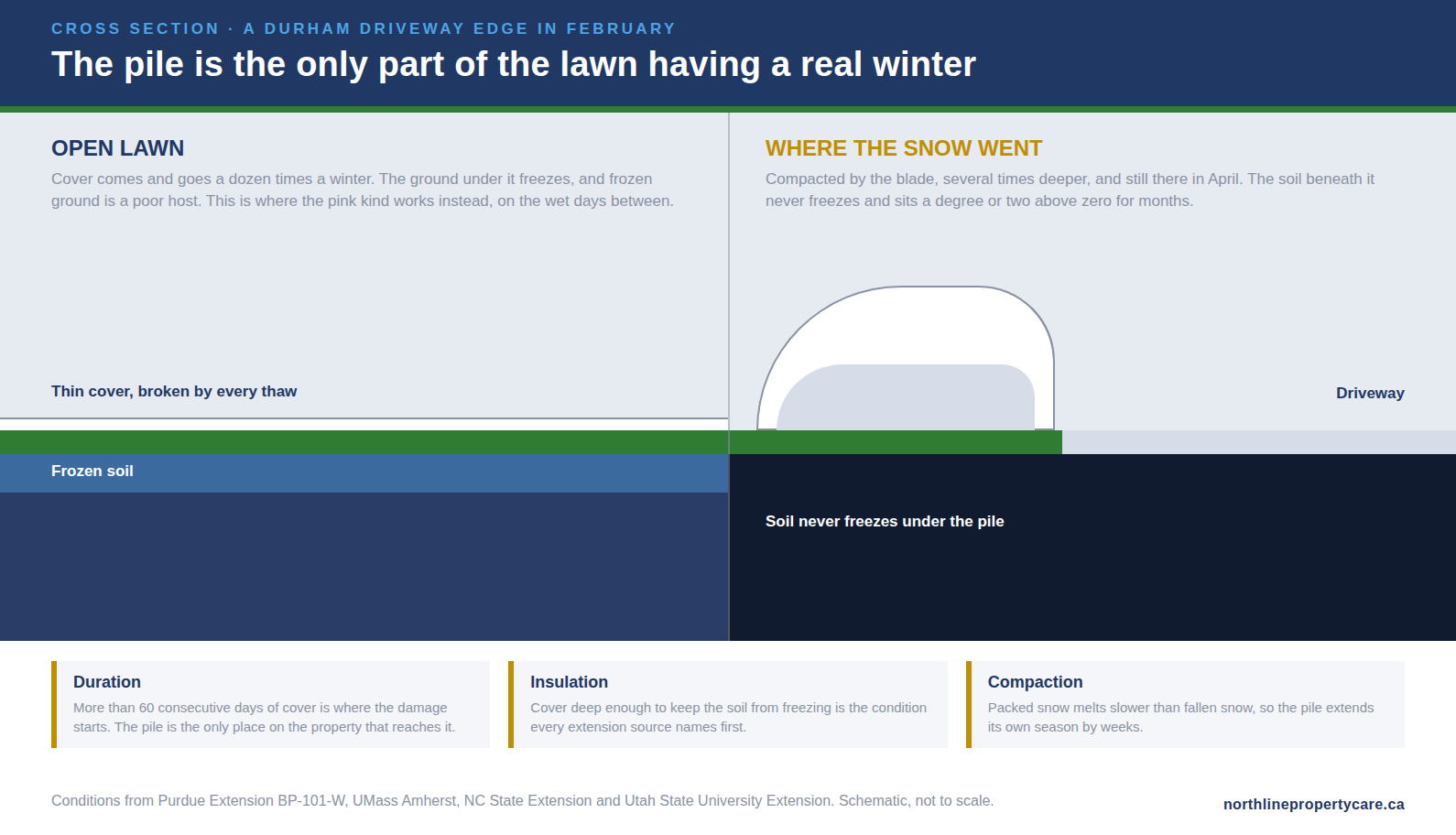
If the lakeshore climate cannot supply the conditions, something on the property has to, and on most Durham lots there is only one candidate. Every extension source that discusses cultural control says the same thing in nearly the same words. Massachusetts says not to pile snow on the lawn when clearing walkways and driveways. Purdue says to avoid accumulating snow along driveways and sidewalks, and lists snow management as a control in its own right. NC State Extension adds the mechanism for compaction, which is that packed snow melts more slowly and so extends the length of the cover.
Read those three together and a plow pile is not simply a pile of snow. It is a manufactured Wisconsin winter, about four metres wide, sitting on your lawn. It is deeper than anything that falls, so it insulates the soil and keeps it from freezing, which Utah State University Extension names as the condition that creates the environment in the first place. It is compacted by the blade, so it melts slower than fallen snow. And it is still there in April when the open lawn cleared six weeks earlier. Duration, insulation and compaction are the three things Typhula needs, and a pile supplies all three in the one part of the property where the climate supplies none of them.
That is why the damage has a shape, and the shape is the diagnosis. Snow mould spread evenly over an open lawn in Oshawa is pink, and it is mostly a cosmetic event. A hard bleached scar in a band along one edge of the driveway, or a semicircle where the turning space was, is grey, and it is a placement problem with a name and an address. Nothing about the weather explains why the rest of the lawn is fine.
Where we put it, and the promise we cannot make
We cannot promise there will be no pile, and anybody who promises you that has not seen a Durham driveway in February. The snow has to go somewhere. It cannot go on the road, because section 181 of the Highway Traffic Act says no person shall deposit snow or ice on a roadway without written permission from the road authority. It cannot go on the neighbour's property. On a typical lot in Windfields or Rolling Acres or Prestonvale there is a strip of lawn either side of the driveway and that is the whole of the available ground.
What can be decided is which strip, and that is the part worth asking about before you sign anything with anybody. One side of a driveway is usually worth less than the other. A north facing strip against a garage wall gets no winter sun and holds the pile longest. A stretch of lawn beside a walkway that nobody looks at is a better place to lose grass than the frontage. A low corner that already drains badly is the worst place of all, because the sources that name drainage name it for this reason.
So the commitment is narrow and it is the only one that is honest: the pile goes to one nominated side, the same side every storm, chosen with you before the season starts, and it is kept off the low ground and off the sunless strip where we have a choice. Putting it in the same place every time matters more than it sounds. Two piles in two places is two patches, and one pile in one place is one patch in a spot you agreed to lose.
And the sentence that costs us something to write down: if your driveway is short enough and your lot is open enough that the snow can be thrown clear rather than piled, that is better for your lawn than anything we can sell you. Not every property allows it. On the ones that do, we will say so rather than build a pile for the sake of tidiness.
What Ontario law actually permits, and the thing most articles get wrong
Snow mould can be legally treated on an Ontario residential lawn, and almost nothing sold for the job may be used on one. Both halves of that sentence are true and most writing on this subject gets one of them backwards.
Ontario bans the cosmetic use of pesticides, and the ban is drafted as a whitelist rather than a blacklist. Section 7.1 of the Pesticides Act forbids the use of any active ingredient on land unless the Director has determined it appropriate for cosmetic use and has listed it. So the question is never whether a product is banned. The question is whether its active ingredient is on the list.
One product clears that bar for snow mould and it is worth naming precisely, because vagueness here is how people end up breaking a law they meant to obey. Health Canada registration 32690 is a domestic class fungicide whose active ingredient is polyoxin D zinc salt, and its label carries suppression of both grey and pink snow mould on turf. Polyoxin D zinc salt sits on Ontario's Allowable List, so the cosmetic ban does not reach it. Note the claim level on the label, which is suppression rather than control.
Everything else on the shelf for this disease is a commercial class product whose ingredients are not listed, which makes it unlawful on a private lawn in this province. The exception people have heard about is golf. Under the regulation a golf course may use unlisted pesticides only if it holds accreditation from an approved integrated pest management body, and it then has to publish an annual report naming every active ingredient, the kilograms used, the reason, and a map of every application area, and keep that published for five years. There is no equivalent permit, accreditation or application available for a lawn. The Ministry of the Environment, Conservation and Parks page on using pesticides in Ontario is the plain language version of all of this.
And here is the unprofitable part, stated because it is the part a contractor has an incentive to leave out. A homeowner may buy that domestic product and put it on their own lawn without a licence. A contractor putting the same product on a customer's lawn for money is performing an extermination for a fee, which needs a Landscape class exterminator licence for the person applying it and an operator licence for the business, whatever class the product is. Northline does not sell a snow mould treatment. It is not in the price list and it is not something to ask us for.
Which leaves cultural practice as the whole of the toolkit, and that is less of a consolation prize than it reads. Every source above puts cultural control first even where spraying is legal, and the levers are the ones already in a lawn care season.
Three decisions in October decide what March looks like
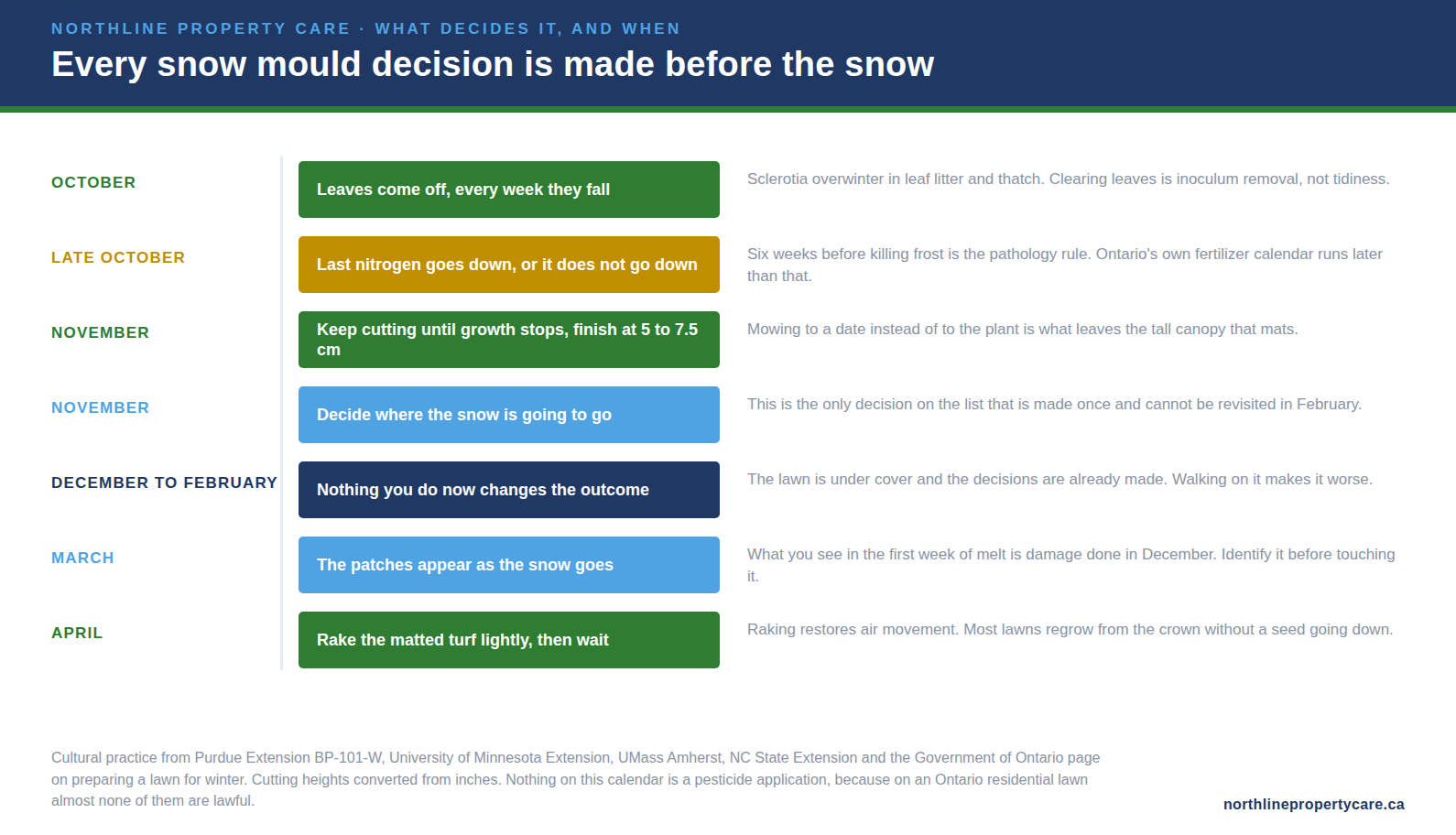
The leaves are not a tidiness question, and the reason is the sclerotia. Penn State Extension records that Typhula sclerotia lie dormant in leaf litter, thatch and soil until the following winter. Leaf litter is therefore not only a blanket that traps moisture against the crown, it is the physical place where next year's infection is stored. Clearing leaves is inoculum removal. The Government of Ontario adds the other half, that thatch harbours disease causing organisms such as snow mould, which is the only sentence on a provincial page that names this disease to homeowners at all. Ontario also allows that a layer of leaves up to fifteen centimetres deep can be mulched into a lawn with a mulching mower without harm, and the reconciliation is simple: finely mulched leaves are fine, whole matted leaves are not.
The last cut is a height, not a date, and the rule is to keep mowing until the grass stops rather than until the calendar says so. Purdue puts continued mowing into dormancy at about 6.4 cm. The University of Minnesota advises against going below about 5 cm after mowing and warns, usefully, that cutting a lawn too short is a bigger stress than the disease it is meant to avoid. Between them the defensible band for a final cut in Durham is 5 to 7.5 cm, reached gradually rather than in one scalping pass, because no more than a third of the blade should come off in a cut. The thing being avoided is a tall canopy that lodges under the first wet snow and mats. Our own page on when to stop cutting grass in Oshawa works the date out from the plant rather than the calendar.
The nitrogen question is the one place where the provincial advice and the pathology advice genuinely disagree, and pretending otherwise would be dishonest. The pathology sources want no nitrogen inside about six weeks of killing frost, and warn off fast release material in late autumn. Ontario's own guidance puts a late season application at mid to late October at half a kilogram of nitrogen per hundred square metres. Both are defensible, because they are optimising different things: Ontario is after autumn root growth, and the pathology literature is after a lawn that does not go under the snow soft and lush. On a lawn with a snow mould history the pathology advice should win. Our page on fall lawn fertilizer in Oshawa works that window through in detail, including the study that fed identical lawns on four dates and found what happened to the nitrogen that went down late.
The fourth decision is the one nobody writes on a calendar, and it is where the snow is going to go. It is made once, in November, and it cannot be revisited in February when the pile is already four feet high and frozen solid.
The seed in your lawn is part of this, and the provincial recommendation is why
Susceptibility is not even across species and the ranking is consistent everywhere it is published. Penn State and Wisconsin both put Kentucky bluegrass and the fine fescues at the resistant end, and annual bluegrass, creeping bentgrass and perennial ryegrass at the susceptible end. Creeping bentgrass is a putting green grass rather than a lawn grass, which is one reason the golf literature makes this disease sound worse than a homeowner will ever see it.
Now read that against what the province recommends a homeowner plant. The Government of Ontario's own page on preparing a lawn for winter gives perennial ryegrass as the general recommendation, with fine fescue for shade or low maintenance and tall fescue for drought tolerance. Perennial ryegrass is on every pathology list as among the most susceptible species there is. The two pieces of advice are not in conflict so much as aimed at different problems: ryegrass germinates fast and establishes quickly, which is what a new lawn needs and what a sod farm sells, and winter disease resistance is not what it was chosen for.
Which gives a homeowner with repeat infections a structural answer rather than a maintenance one. If the same patches come back in the same place in the third consecutive spring, and the placement of the snow has already been dealt with, then the species mix is the next thing to change, and the change is made by overseeding a higher proportion of fine fescue and Kentucky bluegrass into the affected ground rather than by doing anything at all in winter. That is a late August to early October job in this region, and it is the same window and the same method as a full lawn restoration, which exists for lawns the weekly cut cannot fix.
What to do in March, and the mistake that costs you the recovery
Start by doing nothing for a week, because what you are looking at in the first days of melt is damage that finished happening in December. The fungus is not active by then. The patch is a record rather than an event.
Then rake the matted areas lightly, and the reason is air rather than tidiness. Purdue records that recovery is hastened by raking the matted turfgrass because it restores air movement inside the canopy, and Wisconsin says light raking and reseeding can speed recovery. Light is the operative word. The crowns under a matted patch are alive in most cases and a vigorous rake takes them out along with the dead leaf.
Then wait, because most lawns regrow from the crown without a seed going down. Massachusetts states that in most cases only the leaves are killed and regrowth occurs from the plant crowns, and Penn State says mature turf affected by grey snow mould tends to recover quickly once leaf growth resumes. Reseeding is what you do when regrowth does not come, not what you do because a patch looked bad in the first week of April. NC State is the dissenting voice and says recovery can be extremely slow, which is worth holding on to rather than dismissing.
The commercial mistake is the one worth naming, and it is ours to avoid rather than yours. A March photograph of a bleached patch will sell a restoration to somebody who did not need one. We will not quote a restoration off a photograph taken before the lawn has been given a chance to answer for itself, and if the grass at the base of the blade is green when you part the patch with your fingers, the answer is already there.
What we could not verify
Six things were looked for while this page was being written and were not found. They are named below rather than left out quietly, because an article that reports only what it found is not showing its method.
A continuous snow cover figure for Oshawa. Environment and Climate Change Canada publishes days with snow depth at each threshold, which is a season total, and it does not publish a spell length for this station. The sixty day comparison in this article is therefore between a consecutive day requirement and a cumulative day count, which makes the Oshawa case stronger rather than weaker, and it is said that way rather than dressed up as a like for like reading.
Whether pink snow mould kills the crown. The sources genuinely contradict each other. Penn State says the disease affects leaves, stems and crowns. NC State's structured disease profile lists crown and root symptoms as none. It is written above as usually foliar with crown injury possible, because that is as far as the evidence goes.
A snow cover threshold for speckled snow mould specifically. Two credible sources put it at seventy five to ninety days and a third puts it below sixty, which is the opposite ranking. No figure is quoted for that species here for that reason.
Any proportion of snow mould cases that need reseeding, and any recovery time in weeks. No university or government source gives either number. Anything you read that does is somebody's estimate wearing a statistic's clothes.
A homeowner facing snow mould page from the Ontario government. One sentence on the thatch page and the technical identification material in the ministry's turf pest management publication are the whole of it. There is no provincial guide to this disease written for the person whose lawn it is.
The soil series under this part of Durham. The county soil surveys exist and are published by the federal soil information service, but they are scanned page images and could not be read to the point of naming the series under Oshawa, Whitby, Courtice and Bowmanville. Drainage matters to this disease and no map of it is quoted here for that reason.
Questions people in Durham actually ask
What causes snow mould in Oshawa?
Two different fungi and two different sets of conditions. Pink snow mould needs no snow, only weeks of cold wet weather between about zero and 13 C, and Oshawa supplies roughly sixty eight freeze and thaw days between November and March. Grey and speckled snow mould need about sixty consecutive days of snow lying on ground that never froze, which the open lawn in this town does not get, since the station record averages 55.4 days of cover for the entire season. That is why grey damage here is almost always found under a snow pile rather than out in the middle of the lawn.
Will my lawn recover from snow mould on its own?
Usually yes, because in most cases the leaves are killed and the crown is not, and the plant regrows from the crown once growth resumes in spring. The exception is speckled snow mould, which is the one species that kills the crown and often needs replanting. Part a patch with your fingers and look at the base of the blades. Green at the base means the plant is alive and the patch is a leaf problem. Reseeding is the answer when regrowth does not come, rather than something you decide in the first week of April.
Can I spray something for snow mould on my lawn in Ontario?
One product only. Ontario bans the cosmetic use of any pesticide whose active ingredient is not on the province's Allowable List, and the single registered domestic fungicide carrying a snow mould claim for turf is a polyoxin D zinc salt product, Health Canada registration 32690, at suppression level rather than control. Everything else sold for this disease is a commercial class product that is unlawful on a private lawn here. Golf courses are the exception and only under a mandatory pest management accreditation with a published annual report. Northline does not sell a snow mould treatment.
Does piling snow on the lawn really cause it?
It creates the conditions, which is as close to causing it as anything a homeowner controls. A pile lasts far longer than the cover on the open lawn, it insulates the ground so the soil never freezes, and being compacted by a blade it melts slower still. Duration, insulation and compaction are the three requirements every extension source names, and in a lakeshore climate the pile is the only place on the property that supplies all three. The snow still has to go somewhere, so the useful decision is which side of the driveway loses the grass rather than whether a pile exists.
Should I cut the grass short before winter to prevent snow mould?
Lower than usual, not short. The defensible band for a final cut is 5 to 7.5 cm, taken down gradually over the last few cuts rather than in one pass, because removing more than a third of the blade at once is its own stress. What you are avoiding is a tall canopy that lodges under the first wet snow and mats against the crown. Keep cutting until the grass genuinely stops growing rather than until a date on the calendar, since a warm November keeps a Durham lawn going well past the point most people put the mower away.
Why did only one corner of my lawn get it?
Because only one corner had the winter for it. Check what was in that corner between December and April. A plow pile, a shovelled heap beside the walk, a drift held by a fence or a hedge, or a low spot that drains badly will each hold cover for weeks after the rest of the lawn has cleared. Damage with a shape is almost never a weather event, and the shape usually points straight at the cause.
Who wrote this
Andrew owns the business, cuts the lawns and clears the driveways himself, in Oshawa, Whitby, Courtice, Bowmanville, Clarington, Ajax and Pickering, fully insured. He brings six winters of clearing snow in Durham Region to the question of where a pile ought to go, and that tenure is his own rather than the company's trading history.
The pathology here is other people's work and it is linked to the page it was read on every time. Nothing on this page came from a company that sells lawn care or snow removal, including this one, except the description of what we do about the pile. A wrong figure gets corrected fastest on a call to 905-244-5779.
Read next
The last cut, worked out from the plant
The height the grass goes under the snow at is one of the three things that decides March, and the date it happens on is decided by soil temperature rather than by a month.
Work out your last cut →Getting the leaves off before the cover comes
Leaf litter is where next winter's infection physically overwinters, which turns an autumn chore into something with a reason attached. The full checklist, in order.
Open the fall checklist →What a blade does to the edges
The grass along a driveway takes damage from more than the pile sitting on it, and the mechanisms are separate. What is real, what is myth, and who pays.
Read about edge damage →The work, photographed
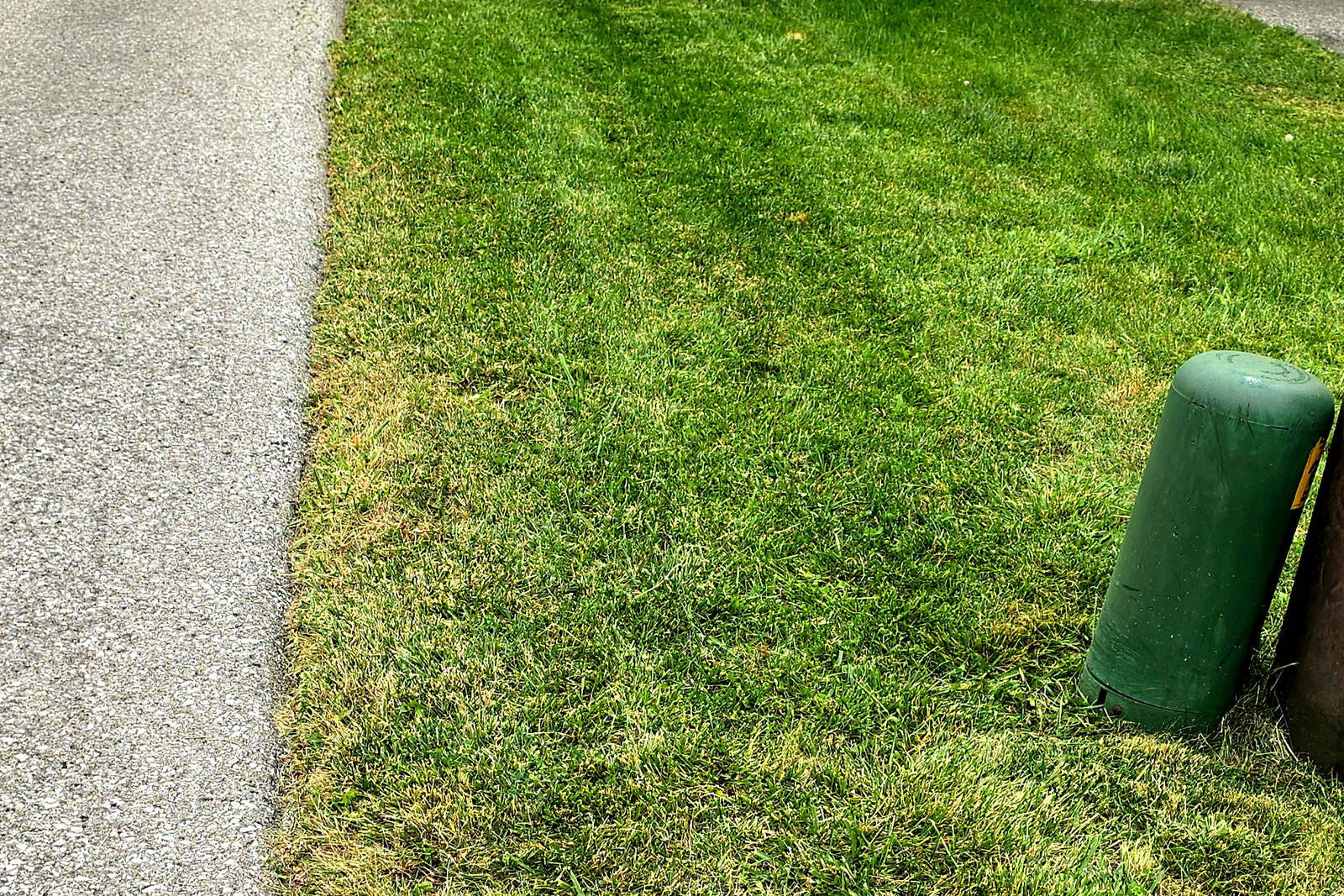
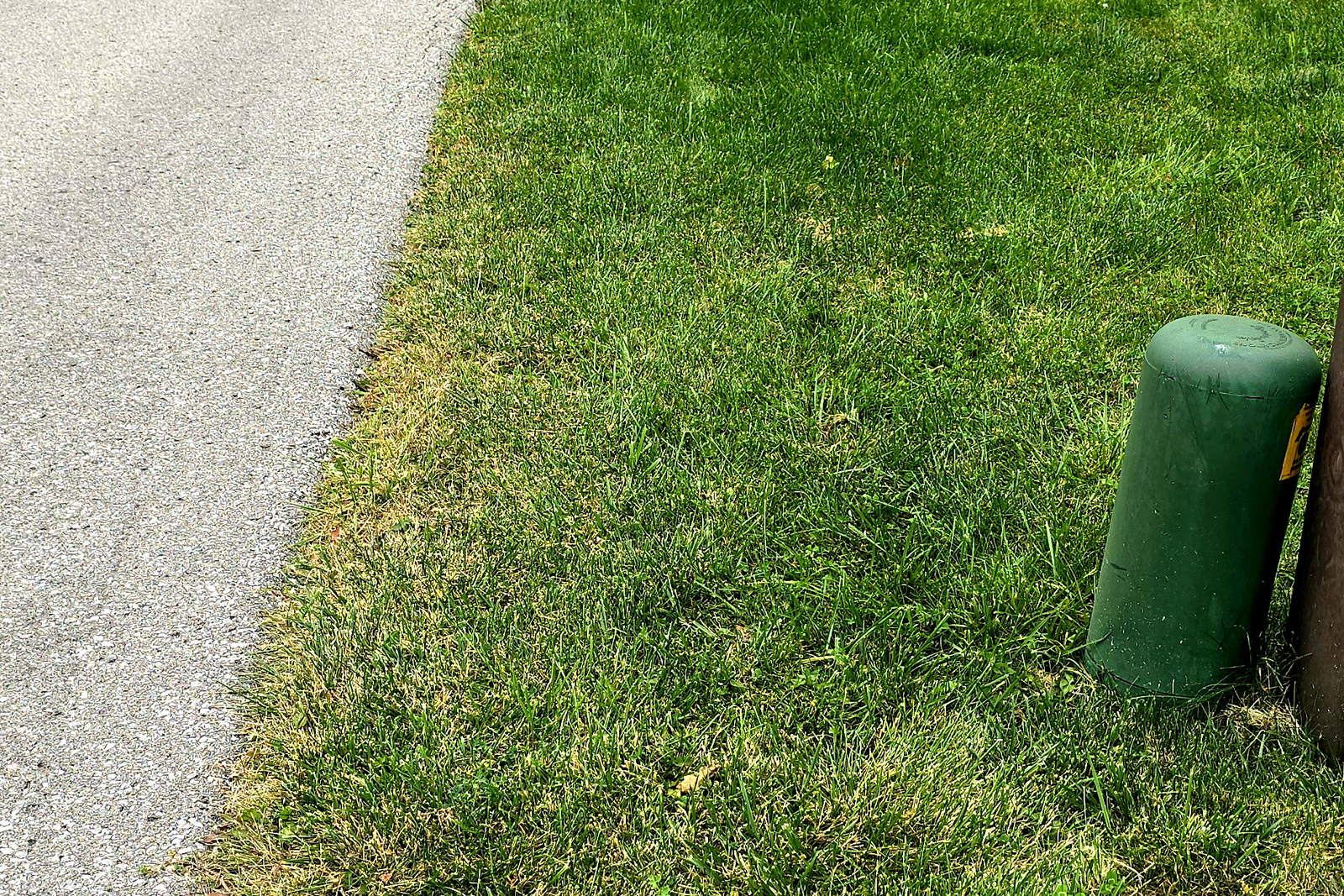
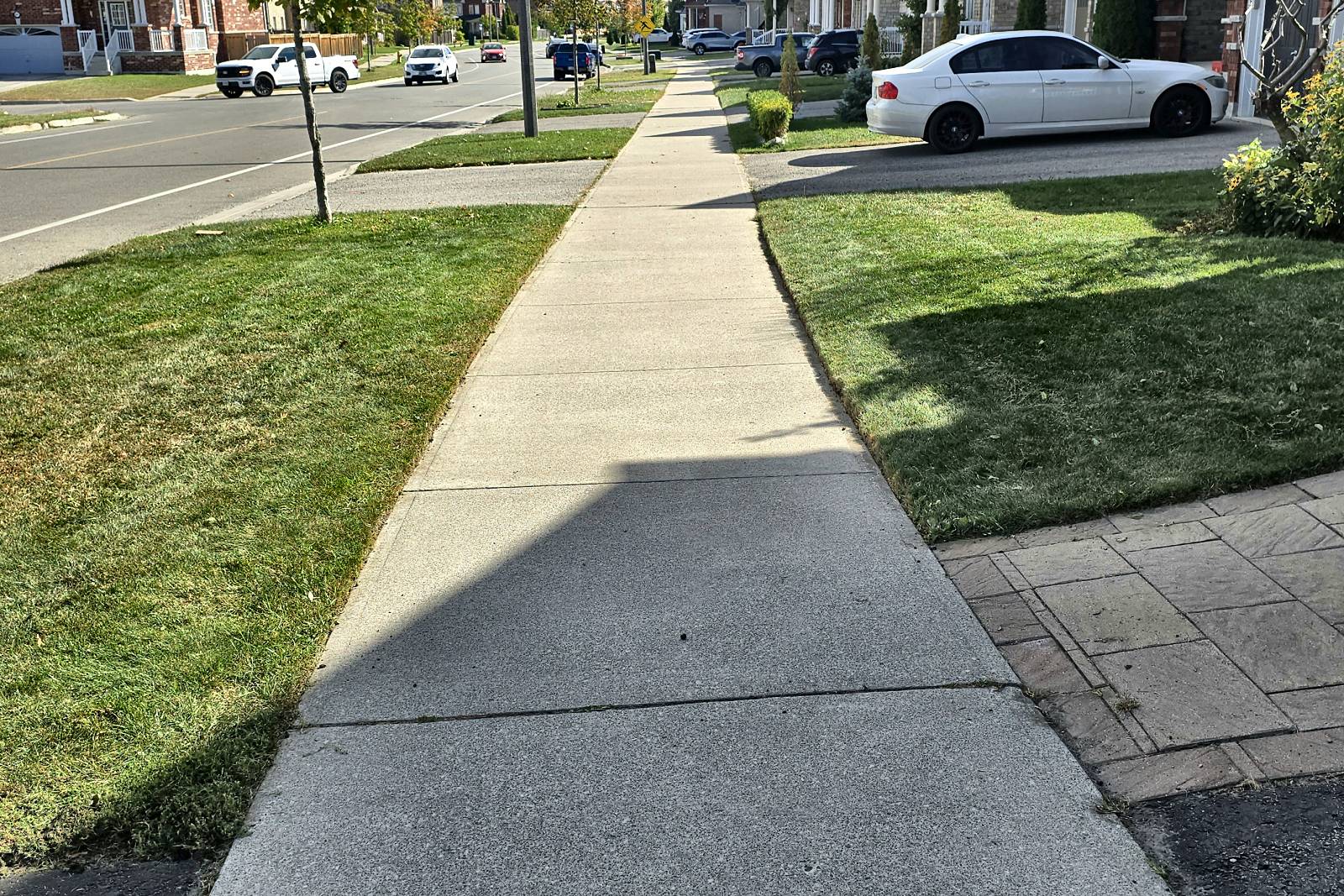
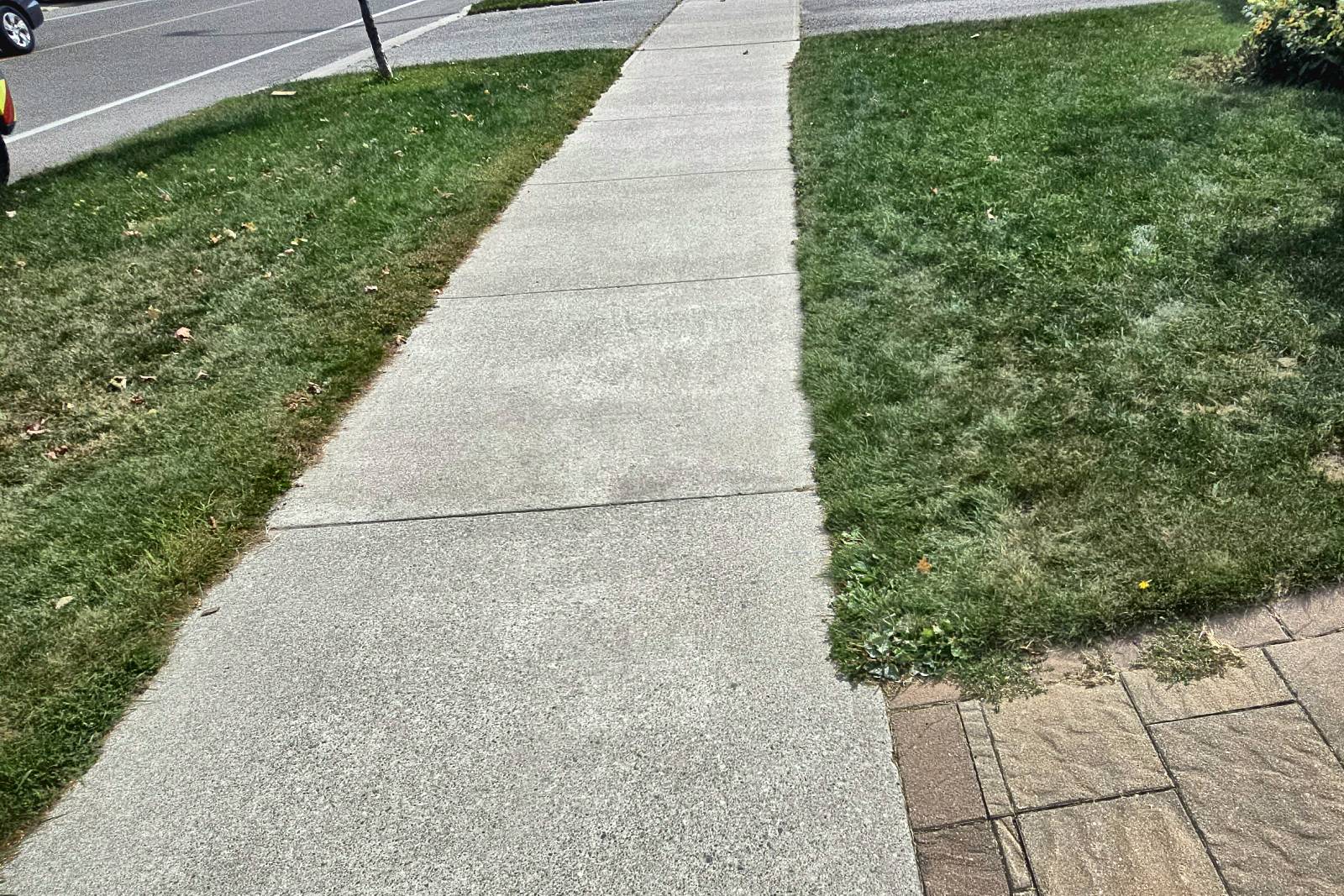
Real Northline properties, before and after, every one of them in Oshawa and every one of them this year. Drag the line to compare.
Andrew answers, October 2026
Why is your season longer than everybody else's?
Because November and April are when the awkward storms happen, and a season that ends on March 31 ends three weeks before the last one. November 1 to May 1 is six months and both ends of it are published, which is the part that matters: a season you can read is a season you can hold me to.
One of these goes on each page and it is replaced monthly. If the question you have is not here, ask it: 905-244-5779.
Decide where the pile goes before the first storm decides for you
Send me your address and I will tell you which side of your driveway is the cheaper one to lose, whether your lot is open enough to throw the snow clear instead, and what the season costs. Memberships start at $129 a month plus HST, and the tiers that plow the driveway itself start at $189.