Snow removal · Pricing
Snow removal cost in Oshawa, and the 8 cm the City will not come for
Snow removal cost in Oshawa is decided by three things, and the size of the driveway is only one of them: the depth at which the work starts, the hour it has to be finished by, and whether anybody at all is responsible for the ridge the plow leaves across the end of it.
Want the service rather than the arithmetic? See what residential snow removal covers.
Green in summer. Clear in winter.
The short answer, before the detail
Snow removal in Oshawa works out between about $41 and about $244 for every clearing a winter actually needs, because the seasonal snow package is a flat $975 plus HST and eighteen complete winters of Environment Canada readings for Oshawa put the number of snowfalls deep enough to trigger a residential clear at about twelve a season, as few as four in the mildest winter and as many as twenty four in the worst, and the price does not move either way. Snow removal in Oshawa costs $129 a month plus HST for the entry membership and $189 a month plus HST for the membership that plows the whole driveway to a 7 AM target after overnight snow. A Northline membership is a flat monthly rate, $129 per month plus HST at the entry tier and $189 per month plus HST for the tier that plows the whole driveway to a 7 AM target, and the seasonal snow package is $975 per season plus HST on a standard residential property. Snow removal cost in Oshawa sits between two numbers that have almost nothing to do with each other. A salt only trip is $25 plus HST. A seasonal snow package on a standard residential property is $975 plus HST for the entire winter, and it covers the driveway, the front walk and the salt, with no visit limit written into it, measured at a 3 cm trigger and carrying a 7 AM target after overnight snow. Between those two sit the memberships, at $129, $189 or $279 a month plus HST. Only two of those three plow a driveway: Gold at $189 and Platinum at $279. Silver at $129 does not, and takes the windrow by 5 PM instead.
A Northline membership in Oshawa is billed in twelve equal payments across the whole year rather than across a five month winter, so the Gold monthly rate carries the weekly lawn service from May 1 to November 1 as well as the plowed driveway in February.
What moves a property between those numbers is not the square footage of the driveway. It is the depth at which somebody starts work, the hour the job has to be finished by, and whether the ridge of plowed snow across the foot of your driveway is anybody's responsibility. The City of Oshawa answers the first two for its own roads in writing, and refuses the third in writing as well.
What the City of Oshawa actually promises, and where it stops
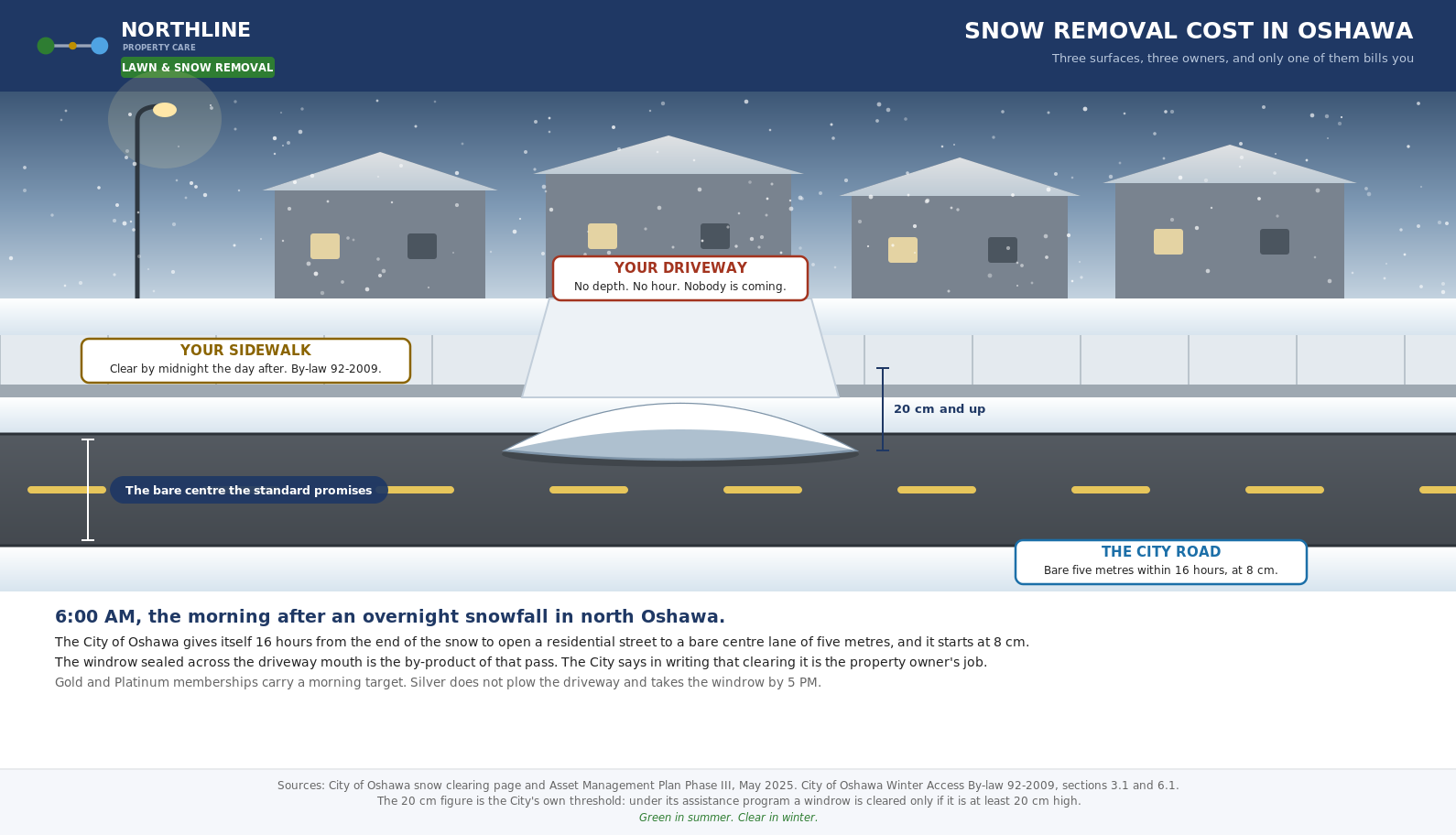
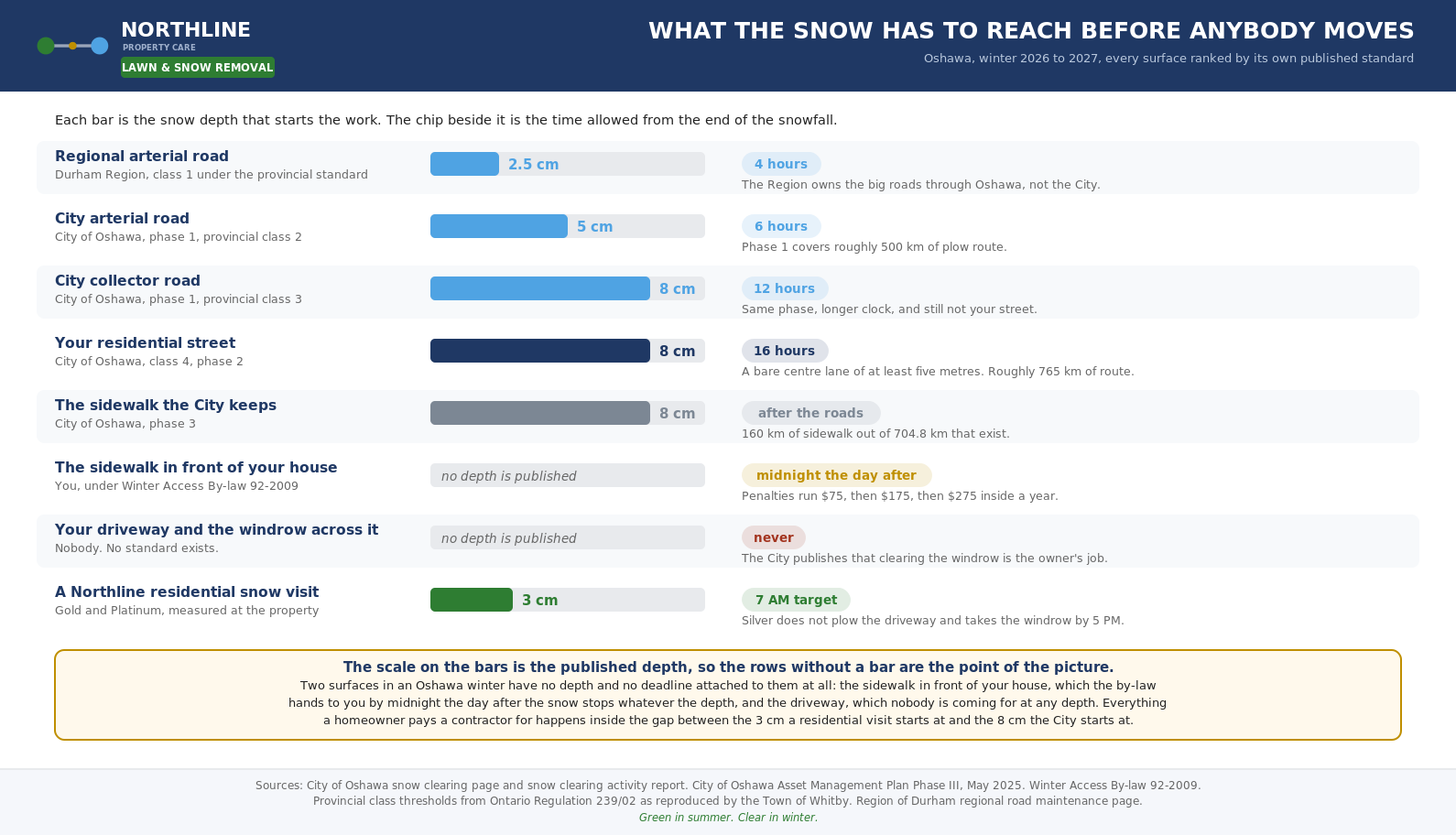
Start with the standard, because almost nobody has read it and it is the single most useful paragraph a Durham homeowner can hold. The City of Oshawa publishes its own service level in its Asset Management Plan Phase III, dated May 2025, and the residential clause is specific in a way almost nothing else about winter is. On what the plan calls a class 4 road, which is a residential street, the minimum standard is to provide a bare total lane width of at least five metres, within 16 hours, while not exceeding a snow depth of 8 cm.
Read that again slowly. The promise is a bare lane of five metres through the middle. It is not a clean road, it is not a clean curb line, and it is certainly not a clean driveway apron. The clock is 16 hours and it starts when the snow stops. The depth that engages it is 8 cm. Below 8 cm on a residential street, the standard has not been triggered at all.
The City sequences the work in four phases. Phase 1 is the primary network, arterial and collector roads, roughly 500 km of plow route. Phase 2 is residential, roughly 765 km. Phase 3 is the sidewalks the City keeps, 160 km of them. Phase 4 is the properties on the Snow Clearing Assistance Program. The City adds one sentence that explains more about February than any of the numbers do: in the event there is new or rapid snow accumulation, the cycle starts over. A storm that arrives in two waves can put a residential street back to the end of the queue after it was nearly reached.
On top of that, the arterials you watch out of your front window may not be the City's at all. The Region of Durham owns and maintains the regional roads through Oshawa, which fall into the fastest provincial class, and the Town of Whitby reproduces the provincial accumulation table for all five classes: 2.5 cm within 4 hours for class 1, through to 10 cm within 24 hours for class 5. So a resident who sees the big road cleared early and the street outside the house untouched at noon is watching two organizations working to two different published standards, not one organization being inconsistent.
And then there is the arithmetic the City does not put side by side itself. Its own asset plan records 704.8 kilometres of sidewalk in Oshawa. Its snow page records 160 kilometres winter maintained. The remainder, roughly three quarters of the sidewalk length in the city, is a legal duty that belongs to whoever owns the property it runs past.
The three ways snow gets sold here, and what each one is really pricing
There are three pricing models for residential snow in this region and they are not three prices for one thing. They are three different products wearing the same name.
Per visit pricing charges for the event. It is the cheapest arrangement in a light winter and the most expensive in a hard one, and it has a failure mode that only shows up on the morning it matters: a per visit customer is a request in a queue rather than a property with a promised hour attached to it. Northline does not sell driveway clearing by the visit, and the reason is that honest rather than commercial. A morning target is a promise about sequencing, and sequencing cannot be promised to somebody whose property is not already in the sequence. The two per visit items that do exist here, a $25 salt only trip and a $45 windrow return trip, are top ups on work already contracted rather than a way to buy a clearing from a standing start.
A seasonal package charges for the winter. It is $800 on a small property, $975 on a standard one and $1,200 on a large one, plus HST, and it has to be booked by November 1. It takes in the driveway, the front walk and the salt, with no limit set on how many times it is done, at the 3 cm trigger, carrying the 7 AM target after overnight snow. The price is fixed before anybody knows what the winter will do, which is the entire point of it.
A membership charges for the year. Silver is $129 a month plus HST, Gold is $189 and Platinum is $279, billed in twelve equal payments taken on the last day of the month, with the first taken on the last day of the month before service begins. There is no deposit and no cancellation fee. Gold plows the driveway and carries the 7 AM target. Platinum is sequenced first with a 6:30 AM target, unlimited automatic salting and first choice of service day. Silver covers the lawn side and the windrow by 5 PM, and does not plow the driveway, which is worth saying plainly because it is the single most common misreading of the three.
The difference that matters when comparing them is not the number. A seasonal package buys one winter. A membership buys a year of property care in which the winter is one half, and the comparison that makes sense is a yearly one rather than a seasonal one. More on that arithmetic below.
How many clears an Oshawa winter actually buys
Here is the uncomfortable answer first: nobody publishes the number of days an Oshawa winter passes 3 cm. Not the City, not the Region, not the federal weather service in a form this page could read on October 6, 2026. That number is what turns a seasonal price into a price per clearing, and it does not exist publicly. Any page that gives you one has estimated it, and an estimate wearing the clothes of a measurement is worse than no number at all.
What is published is close enough to be useful, provided you are told what it is. The Region of Durham commissioned its own climate study, and the executive summary revised April 16, 2014 reports a baseline decade of 2000 to 2009 at a proxy point near Whitby: nine days a year with snowfall exceeding 5 cm, and a maximum one day snowfall of 28 cm. That is a model output validated against that decade rather than a weather station reading, and it is the 5 cm count rather than the 3 cm count, so the real number of residential clearings is higher than nine. How much higher is exactly what nobody can tell you.
The regional context around that figure is firmer. A peer reviewed study of winter precipitation across Ontario, published in the journal Hydrology in 2022, analyzed thirteen stations and found Toronto Pearson had a mean winter snowfall of 119.2 cm, the lowest of all thirteen. Statistics Canada, drawing on federal weather records, puts Toronto at 115.4 cm of snow a year against Ottawa at 235.7 cm. Oshawa is on the same shoreline band as those Toronto readings, and it is the light end of Ontario rather than the heavy end.
The reason is the lake, and the mechanism runs the opposite way to how most people assume. Lake effect snow belts form on the lee shore, east or south of a Great Lake, where air that has crossed open water piles up against rougher land and is forced to rise. Michigan State University publishes the diagram and makes the corollary explicit: the windward shore inhibits the process rather than producing it. Oshawa sits on the northwest shore of Lake Ontario, which is the windward side under prevailing west and northwest flow. A study of heavy lake effect events on Erie and Ontario published in Atmosphere in 2020 found that of 88 heavy events between 2006 and 2014, Oswego County at the far eastern end of Lake Ontario took 65 of them. The long axis of the lake aims its heaviest snow at New York State, and Oshawa is upwind of the aim.
The cheapest illustration of the difference comes from the federal weather service itself. Its historical Christmas snowfall data gives Barrie a 76 per cent chance of a white Christmas with a typical depth of 16 cm, against the Toronto area at 50 per cent and 5 cm. Treat that as the shoreline band rather than as an Oshawa figure, because Oshawa is not listed separately and because snow on the ground on one calendar day is a different measurement from snowfall across a season. The direction of it is not in doubt.
So the honest summary is this. Oshawa gets a lighter winter than its reputation, the spread between a light winter and a hard one is wide, and the number that decides your cost per clearing is the one number in this whole subject that nobody measures.
The arithmetic, done both ways, including the way that costs me the sale
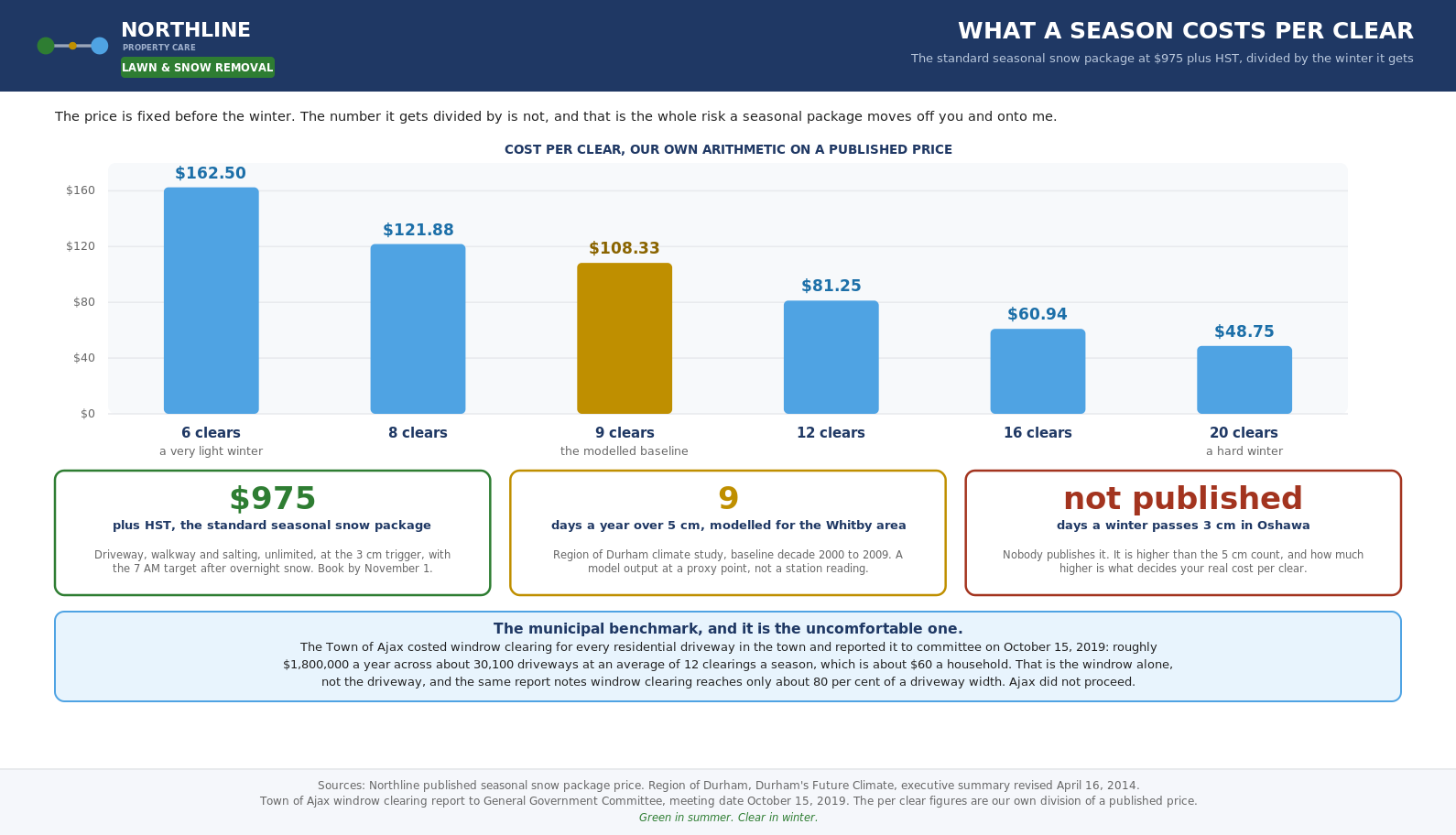
Take the standard seasonal package at $975 plus HST and divide it by the winter. At nine clearings it is $108.33 each. At twelve it is $81.25. At sixteen it is $60.94. At six, which is a genuinely light Durham winter, it is $162.50 each, and in that winter you would have been better off paying somebody per event, assuming you could find somebody willing to come out for one driveway at seven in the morning.
That is the deal written honestly. A seasonal price is not a discount and it was never meant to be one. It is the transfer of a spread. You pay a known number in October and I carry the difference between a winter with six clearings in it and a winter with twenty. In two winters out of three that trade favours the person selling it, which is why it exists, and in the third it does not.
There is a municipal benchmark for the same work, and it is the most useful number in this entire article because it comes from an organization with no profit motive and every advantage of scale. The Town of Ajax costed windrow clearing for its whole residential base and reported it to committee on October 15, 2019: roughly $1,800,000 a year across about 30,100 residential driveways at an average of twelve clearings a season. That works out at about $60 a household for the season. The same report notes that windrow clearing reaches only about 80 per cent of a driveway width, and Ajax did not proceed.
Hold the two numbers next to each other. A municipality, working at the largest scale available in this region, costed the easiest fraction of the job at about $60 a household and declined to do it. A private seasonal price covers the whole driveway rather than the windrow, plus the walkway, plus the salt, plus a morning target that no municipal program offers at all. They are not the same product and the gap between them is not margin, it is scope.
The membership arithmetic runs on a different axis. Gold at $189 a month is $2,268 a year plus HST, and that year includes the weekly cut right through the growing season, the spring cleanup, the fall cleanup and the driveway cleared all winter. Weekly mowing bought on its own, with no membership attached, starts at $75 a cut, and twenty six of those comes to $1,950 before a single leaf is collected and before any snow falls at all. The winter, in other words, costs roughly three hundred dollars more than buying the mowing by itself. That is the comparison worth doing before comparing two snow quotes against each other, and it is why I would rather talk about a year than about a storm.
One correction to a figure people quote at me. The seasonal package price is the price for a standard residential property. A longer property moves to a published band rather than to a negotiation: 0.35 to 1.0 acre, or any driveway over 100 feet, is $1,750 for the season and $229, $349 or $499 a month. From 1.0 to 3.0 acres, or a laneway over 250 feet, is $2,600 for the season and $329, $519 or $739 a month. A laneway beyond 400 feet adds $200 for each additional 100 feet, published as a formula so that a property can be priced without anybody driving out to look at it. Above three acres there is no published price, and that is deliberate. Above three acres the turf, the laneway and the question of where the pile goes stop being predictable from acreage, and a published number would be a number nobody could stand behind.
What is inside the price that nobody itemises
A snow quote is four or five lines on a page and about eight things underneath it. Here are the ones that moved this year, every one of them from a published source.
Labour moved on October 1, 2026. The Ontario general minimum wage went to $17.95 an hour on that date, from $17.60, an increase of about two per cent tied to the provincial consumer price index. That is a floor rather than a rate for skilled winter work, but it moves the whole structure above it, and it moved after most seasonal prices for this winter had already been quoted.
Fuel is doing something general inflation is not. Statistics Canada's consumer price index for August 2026, released September 14, 2026, put gasoline up 22.8 per cent against the same month a year earlier and the whole transportation component up 7.5 per cent, against all items at 3.0 per cent nationally and 2.4 per cent in Ontario. Strip gasoline out of the national figure and it falls to 2.4 per cent. So the single cost line that a winter operation cannot avoid is running at several times the rate of everything else, and a price list written against general inflation is a price list written against the wrong number.
Salt is chemistry, not effort, and it has a floor temperature. The City of Toronto publishes that salt begins to lose effectiveness at minus 10 degrees Celsius and is ineffective below minus 20, and a Toronto staff report of November 17, 2020 describes rock salt as generally very effective from zero down to about minus 10, with enhanced formulations needed below minus 15. That same report prices the City's own supply at an average of $89 a tonne. Below the working range, a contractor has three options and only two of them are honest: apply more of a material that is not working, switch to a material that costs several times as much, or tell the customer that the surface will be managed rather than bare. Anybody promising bare pavement at any temperature is promising something the chemistry does not do.
And the half of the salt story that almost never reaches a customer. In December 2001 a federal assessment concluded that road salts carrying inorganic chloride meet the definition of toxic in section 64 of the Canadian Environmental Protection Act. The federal Code of Practice for the Environmental Management of Road Salts followed in the Canada Gazette on April 3, 2004, and it is voluntary, aimed at organizations whose annual use passes 500 tonnes, measured on a rolling five year basis. National use runs at roughly five million tonnes annually. None of that makes salting wrong, and a driveway at minus 5 with a layer of ice on it needs salt. It does mean that unlimited salting ought to describe automatic application at the right rate rather than an invitation to put down more than the surface needs, and on this price list that is what it describes.
Records are a cost and they are worth paying for. The Occupiers' Liability Amendment Act, 2020, which received Royal Assent on December 8, 2020, adds a section 6.1 to Ontario's Occupiers' Liability Act. That section bars a damages claim for injury from snow or ice unless the injured person gives written notice inside 60 days. The notice must carry three things: when it happened, at what hour, and exactly where. It has to be handed over in person or sent by registered mail. The list of people on whom that notice may be served includes the independent contractor employed by the occupier to remove snow or ice. The sixty day clock runs against the contractor as well as the property owner. A contractor who keeps a dated record of every visit and every salt application can answer a notice like that. One who does not keep records cannot, and neither can the homeowner who hired him. This is a description of what the statute says rather than legal advice, and anybody with a live question about it should ask a lawyer rather than a snow contractor.
The last input is the one that is not there at all. Ontario publishes no trade licence for clearing snow. Of the 144 prescribed trades in the province, 23 are compulsory, and none of them is a snow or grounds trade. The nearest prescribed trade, Horticultural Technician, trade code 441C, is explicitly non compulsory. Anybody in this province may legally take money to plow your driveway, with no examination, no ticket and no register. That is a statement about provincial trade qualification and not about municipal business licensing, which is a separate question this page did not check. It is also the real explanation for why two quotes for the same driveway can be two hundred dollars apart: the difference is insurance, records, equipment and whether the person turns up, because there is no qualification doing any of that work for you.
The by-law that makes a cheap quote expensive
Oshawa's Winter Access By-law 92-2009 contains a sentence that decides more about contractor quality than any price does. Section 6.1 makes it an offence to take snow or ice off private property and put it on a sidewalk or a highway, whether by moving it, piling it or redistributing it. The by-law covers causing the accumulation as well as doing it yourself, which reaches the homeowner who hired the person holding the blower.
That is the rule a contractor breaks when he blows a driveway into the road because there is nowhere else convenient to put it. The by-law attaches administrative penalties under section 8.3 that escalate inside a one year period at $75, then $175, then $275, and on conviction section 10.1 sets a range of $300 to $5,000 for a first offence, $400 to $10,000 for a second within twelve months, and $500 to $25,000 for a third or subsequent one. The same by-law, at section 3.1, hands you the sidewalk in front of your house, to be cleared by midnight on the day following the end of the snow or the freezing precipitation.
A quote that is cheaper because the snow goes into the road is cheaper because somebody else is carrying the risk, and on a residential lot that somebody is the owner of the property. It is worth asking where the snow is going before asking what it costs, and a contractor who has an answer about the pile has thought about February.
Which is the other half of why driveways are not all priced alike. On a narrow lot in Windfields or Samac with a double driveway and a metre and a half of side yard, there is nowhere to put the February pile except on top of January's, and pushing it back once or twice a season is real work that a flat seasonal price has to absorb. A corner lot with an open side yard has no such problem and never will. That difference is invisible in a photograph and obvious in person, and it is the main reason a quote moves once somebody has actually looked at the lot.
Two more local rules that cost money when they are ignored. Oshawa prohibits on street parking between 2 AM and 6 AM from December 1 to April 1, and a vehicle that interferes with clearing operations can be ticketed or towed at any time of the year. A car parked across the apron at six in the morning is the single most common reason a morning target is missed, and it is the one variable in this whole article that the customer controls completely.
The windrow, and five different answers inside one region
The windrow is the ridge of compacted snow the road plow leaves across the mouth of a driveway. It is heavier than the snow that fell, because it has already been moved once and because it carries road grit and whatever the plow picked up along the way. It is also the thing nobody owns. The City of Oshawa states it plainly on its own page: windrow clearing is the responsibility of the home or property owner, and windrows are an unavoidable result of clearing roads quickly and safely.
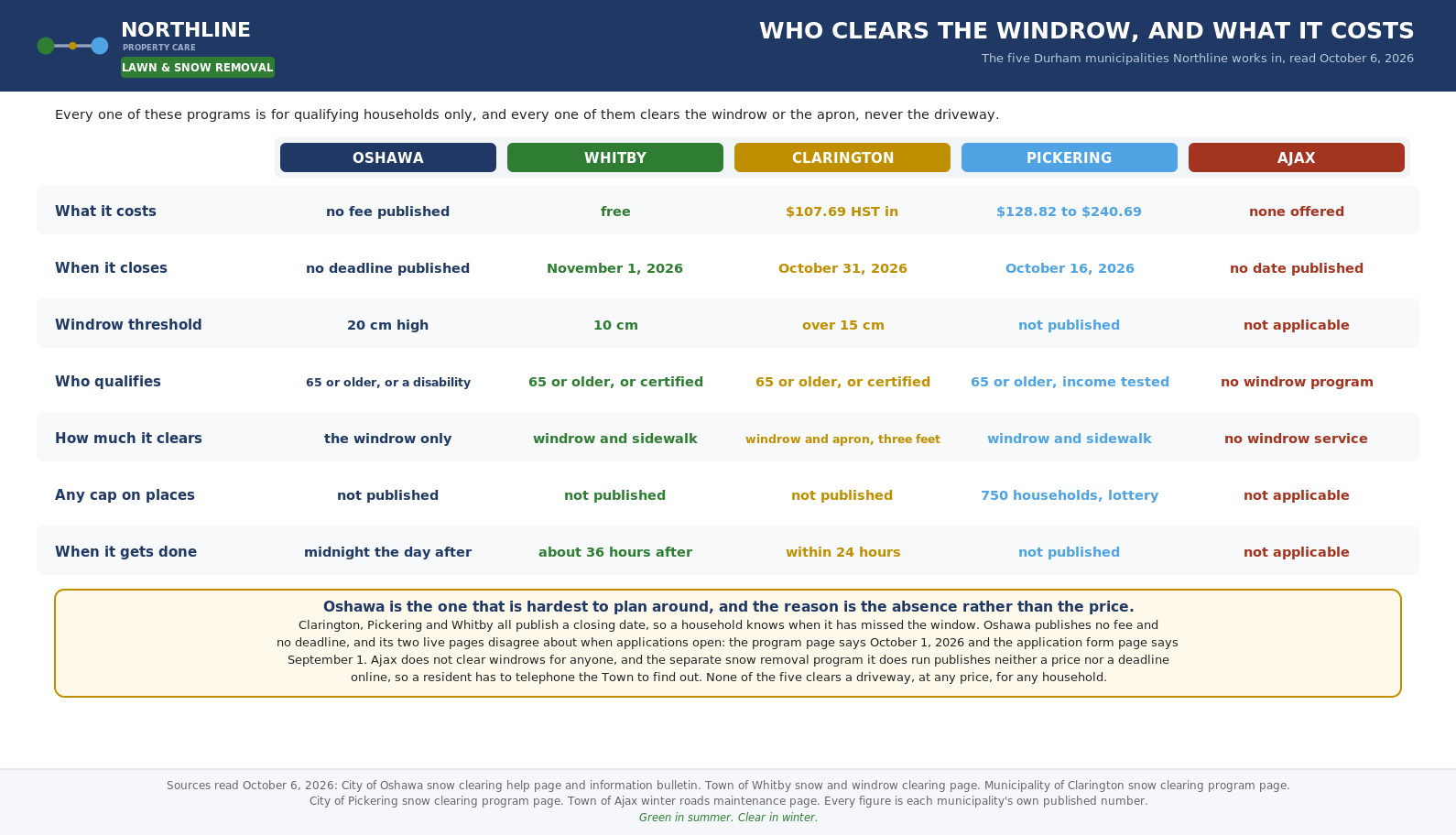
There is one exception, and if you qualify for it you should take it. The Snow Clearing Assistance Program covers a resident who is 65 years of age or older, or who has a disability, living in a single family dwelling with nobody under 65 without a disability at the address, with proof required. It clears City sidewalks and the driveway windrow, and only when the windrow is at least 20 cm high. Service commences as soon as practical after a snowfall of more than 2.5 cm, with planned completion by midnight the day after the snow ends. Applications reopen on October 1, 2026 and renew annually.
If that describes your household, apply, and stop reading price lists. No fee at all is published for the Oshawa program, and nothing on this page competes with a service that publishes no fee. The one practical warning is that the City is unusually hard to plan around here: its program page says applications open on October 1, 2026 while its own online application page says the period becomes available on September 1, and no closing date is published anywhere. The answer to a deadline that does not exist is to apply early rather than to wait for one.
Across the town line the answers change completely, which catches out anybody who has moved within Durham. Whitby runs its program free of charge with applications closing November 1, 2026, clears the windrow at 10 cm and the sidewalk at 5 cm, and tells residents service typically begins about 36 hours after the snow has stopped. Clarington charges $107.69 including HST with a window of September 21 to October 31, 2026, clears windrows over 15 cm plus up to three feet of driveway apron, and starts sidewalks within 24 hours. Pickering charges by income band, free for recipients of the provincial income supplements and $128.82, $186.45 or $240.69 above that, with registration closing October 16, 2026, a cap of 750 households and an electronic lottery if it is oversubscribed. Ajax does not clear windrows for anybody and says so.
Read the whole row and the pattern is obvious. Three of the five publish a closing date in October or on November 1. Every one of the five is limited to qualifying households. And not one of the five, at any price, clears a driveway. The municipal programs exist to undo the damage the municipal plow did, and they stop at the end of it. The longer piece on windrow clearing across Durham Region goes through each program in detail if you want the full set of conditions.
The four questions that move a quote more than the driveway does
If you want a price that will not change after somebody has seen the property, answer these four before you ask for one. They are the four that actually move a number.
Where does the snow go in February. Not in December, when there is room everywhere, but in the third week of February when every edge already has a pile on it. Side yard width, the position of the gas meter, a fence line, whether the pile can be pushed back or has to be relocated. This is the question that separates two identical driveways into two different prices.
What time the car has to leave. A 6:30 AM target, a 7 AM target and a windrow pass by 5 PM are three different products and they cost three different amounts, because the earlier the target the fewer properties can sit ahead of yours in the morning. If nobody in the house leaves before nine, you are paying for an hour you do not use.
Whether there is a walkway, and whose sidewalk runs past the house. The front walk is part of the seasonal package and the municipal sidewalk is a separate legal duty under the by-law. On a corner lot the sidewalk frontage can be double, which is double the by-law exposure and more work than the driveway itself.
The length of the driveway and the size of the lot. Over 100 feet of driveway, or over 0.35 of an acre, and the property moves into a published band rather than the standard price. The two numbers that settle it, acreage and laneway length, are both on your property tax bill and on the listing the house was bought from, so they can be read off paper rather than measured in the snow.
There is a fifth that is not really a question about the property. If the house sits on a dead end or a court, the road plow will leave a larger windrow there than on a through street, because that is where the material from the turning circle ends up. It is worth mentioning when asking for a price rather than discovering it in January.
Who should not buy any of this
Every price page should contain this section and almost none of them do. Here are the cases where the right answer is not to buy from me.
If you are 65 or older in Oshawa, or a person with a disability, and the windrow is the only part of the job you cannot manage, apply to the City's assistance program. It publishes no fee. Nothing on this page beats a service that publishes no fee, and I would rather tell you that in October than take a payment in November for something you could have had from the City.
If you have a short single driveway, a snow blower that starts, and nobody in the house who has to be out of it by half past seven, a seasonal package is probably poor value and the arithmetic above says why. In a six clearing winter you would be paying $162.50 for each one. Buy the package for the mornings you cannot miss, not for the snow.
If what you actually want is the driveway cleared before you leave for work, do not buy Silver. Silver at $129 a month is the lawn side plus the windrow by 5 PM, and it will disappoint anybody who bought it expecting a plowed driveway at seven in the morning. Gold at $189 is the tier that does that, and I would rather sell the right one than take the cheaper sale and lose the customer in January.
And one thing that is not a reason to buy today but is a reason to decide today. A route can only hold the number of properties that can all be clear by a published morning target, so it fills and then it closes, and it does not reopen in the middle of the winter. Roughly four fifths of the annual search interest in snow removal in this region arrives between November and March, with the heaviest weight in December and January, which is to say that most people start looking for this service after the point at which it could have been arranged calmly. That is a structural problem rather than a sales line, and the only thing that solves it is deciding in October.
If you want to see what a membership covers across the whole year rather than one season, the memberships page sets the three tiers side by side, and the page on snow removal in Oshawa covers how the service runs after a storm in the specific neighbourhoods on this side of the city.
What we went looking for and could not find
Every figure above comes from a municipality, a region, a provincial or federal government body, a university or a peer reviewed journal, and not one of them came from another property maintenance company, because a competitor price page is marketing rather than evidence. That method has a cost and here is the bill.
No federal climate normals for Oshawa. The national climate data service refused every automated request made to it on October 6, 2026, so this page carries no snowfall normal for an Oshawa weather station and no year by year season totals. The nine days over 5 cm figure used instead is a model output from the Region of Durham's own study, and it is labelled as one everywhere it appears.
No count of days an Oshawa winter passes 3 cm. This is the number that converts a seasonal price into a price per clearing and it does not exist publicly in any form. Every cost per clearing figure above is therefore a division of a real price by an assumed count, and the counts are shown as a range for exactly that reason.
No City of Oshawa winter control budget line. The nearest published figure is Program 240, Roads Operations, at $17,968,900 for 2026 against $17,893,900 in 2025, and winter control is not broken out of it. No salt tonnage is published for Oshawa either.
No Region of Durham winter control figure. The Region publishes its network size and its anti icing method but no winter maintenance dollar figure and no tonnes of salt for any Durham municipality.
No fee and no deadline for the Oshawa assistance program. Neither appears on the program page, the information bulletin or the application form, and the only bulletin posted is titled for the 2025 to 2026 season. Two live City pages give different opening dates.
No current Ontario pump price from a government source. The provincial fuel price page serves its figures through a script that did not return data, and the most recent reading available from a federal source is the week ending December 9, 2025. That is far too old to put in a cost article, so this page uses the published rate of change instead of a price level.
No proclamation date for the snow and ice notice provision. The statute says it comes into force on a day named by proclamation and the legislative record does not name that day. Royal Assent on December 8, 2020 is what is verified here, and nothing further is claimed.
No settled answer on commercial vehicle registration for a plow pickup. Ontario requires a commercial vehicle operator's registration above a registered or actual weight of 4,500 kilograms, and the published pickup exemption is conditioned on personal use without compensation, so it cannot cover paid work. Where any particular truck lands depends on the registered gross weight on its own plate, and the province publishes no worked example for snow clearing.
A page that reports only what it managed to find has hidden half of what it did. The list above is how you judge whether the rest of it was checked properly.
Questions people actually ask about what snow removal costs here
How much does snow removal cost in Oshawa?
On a standard residential property the published prices are a seasonal snow package at $975 plus HST for the whole winter, or a membership at $129, $189 or $279 a month plus HST. Only Gold at $189 and Platinum at $279 plow the driveway; Silver at $129 covers the lawn side and takes the windrow by 5 PM. A salt only trip is $25 and a windrow return trip is $45. Small properties are $800 for the season and large ones $1,200. A driveway over 100 feet, or a lot over 0.35 of an acre, moves to a published estate band starting at $1,750 for the season.
Is a seasonal contract cheaper than paying per storm in Oshawa?
It depends entirely on the winter, and that is the honest answer rather than a hedge. The standard seasonal package at $975 plus HST works out at $162.50 a clearing in a six clearing winter, $108.33 at nine, $81.25 at twelve and $60.94 at sixteen. A seasonal price is not a discount on per visit work. It is the transfer of that spread from you to the contractor, plus a morning target that per visit work cannot offer, because a property has to already be in the sequence before an hour can be promised for it.
Does the City of Oshawa clear the windrow at the end of my driveway?
Not for the general resident. The City states on its own snow clearing page that windrow clearing is the responsibility of the home or property owner and that windrows are an unavoidable result of clearing roads quickly and safely. The one exception is the Snow Clearing Assistance Program, open to a resident who is 65 or older or who has a disability, in a single family dwelling with nobody under 65 without a disability at the address. It clears the windrow only when the windrow is at least 20 cm high, and it clears City sidewalks. Applications reopen on October 1, 2026 and the City publishes no fee for it.
At what depth does the City of Oshawa plow my street?
The City's own asset management plan, dated May 2025, sets the residential standard as a bare centre lane of at least five metres within 16 hours, at a snow depth not exceeding 8 cm. Residential streets are the second phase of the work, after roughly 500 km of arterial and collector plow route. The regional roads running through Oshawa belong to the Region of Durham and sit in the fastest provincial class at 2.5 cm within 4 hours, which is why a big road can be clear while a residential street is not.
Do I have to shovel the sidewalk in front of my house in Oshawa?
In most of the city, yes. Oshawa winter maintains 160 kilometres of sidewalk, and its own asset plan records 704.8 kilometres of sidewalk in total, so roughly three quarters of the length belongs to the adjoining property owner. Winter Access By-law 92-2009 section 3.1 sets the deadline at midnight on the day after the snow or the freezing precipitation stops falling. The administrative penalties escalate inside a one year period at $75, then $175, then $275, and the City can also invoice the cost of doing the work itself.
Why do two snow removal quotes for the same driveway come back so far apart?
Because Ontario requires no trade qualification to do this work. Of the 144 prescribed trades in the province, 23 are compulsory and none of them is a snow or grounds trade, and the nearest prescribed trade, Horticultural Technician, is non compulsory. With no licence doing any of the sorting, the difference between two quotes is insurance, records, equipment, where the snow is being put, and whether a morning target is being promised at all. A quote that is cheap because the snow goes into the road is cheap because Winter Access By-law 92-2009 section 6.1 is being broken, and the penalty for that lands on the property.
Who wrote this
Northline Property Care is Andrew's business, run out of Oshawa and working into Whitby, Ajax, Pickering, Bowmanville, Courtice and Clarington. Six winters clearing snow in Durham Region stand behind it. That is Andrew's personal record and not a statement about how long the company has traded, because Northline itself registered in August 2026. The person who prices the property is the person who turns up and does the work on it, and nothing is handed off to anybody the customer was not told about.
The sourcing rule on this page is worth stating because it shaped what you have just read. Every external figure here is traceable to a by-law, a municipal service page, a report to a council committee, a provincial or federal department, a university or a journal that peer reviews what it prints, and the document is named beside the figure it produced. Nothing came from another lawn care or snow removal company, including the prices, because a competitor's published number is a marketing decision rather than a measurement. Where a source contradicted itself, as the City of Oshawa does on the opening date of its assistance program, you were told about the contradiction instead of being handed the tidier half of it. If a number above is wrong, 905-244-5779 reaches the person who typed it, which beats a correction form every time.
Read next
When to book snow removal
Why the decision has to be made in October, what happens to a route once it closes, and the dates that actually bind.
Read the booking piece →Snow removal in Oshawa
How the service runs after a storm in Windfields, Samac, Taunton and Donevan, and what each tier covers on the morning.
See the Oshawa page →The Oshawa snow by-law
The sidewalk deadline, the penalties, and the section that makes pushing snow into the road an offence.
Read the by-law piece →The work, photographed
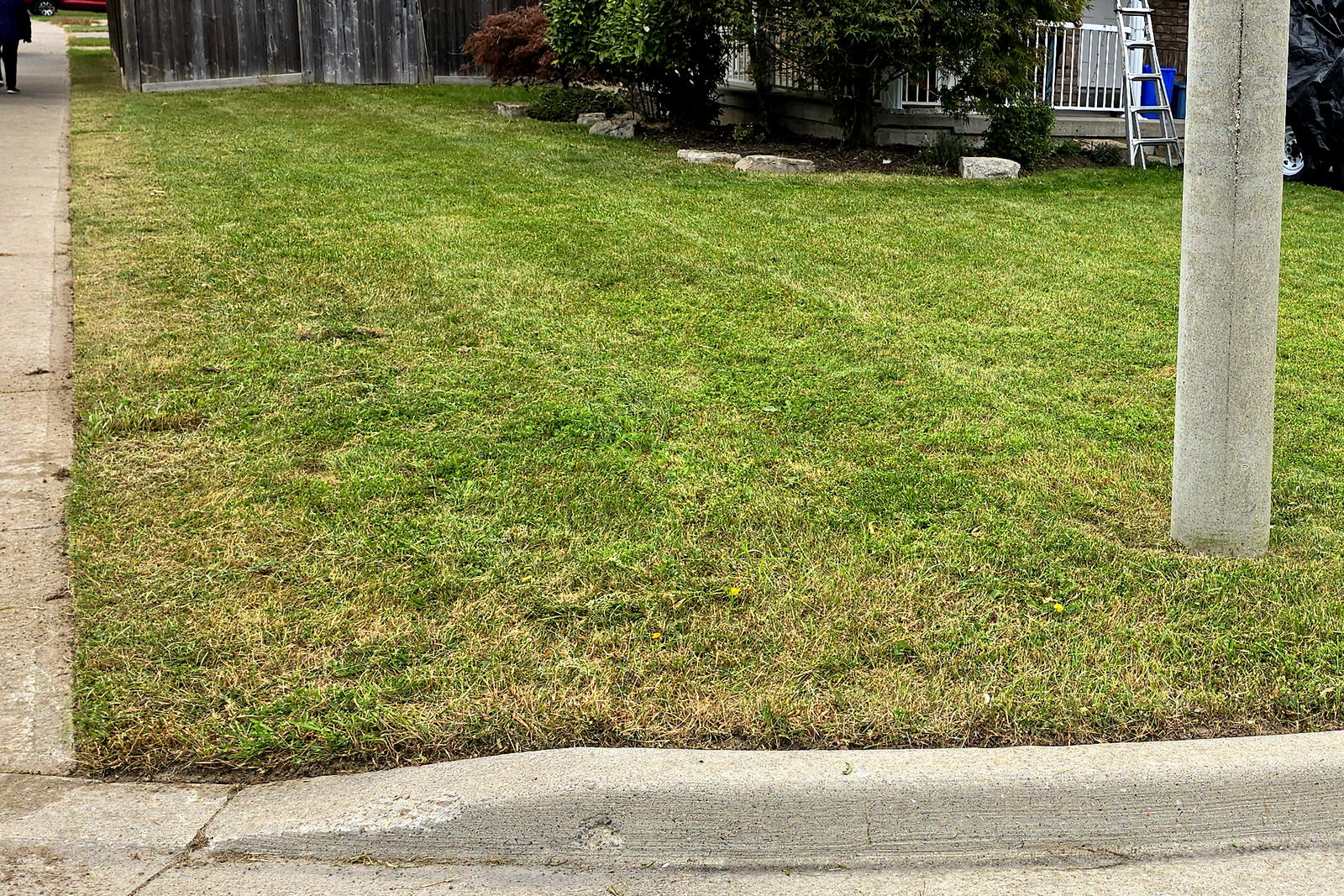
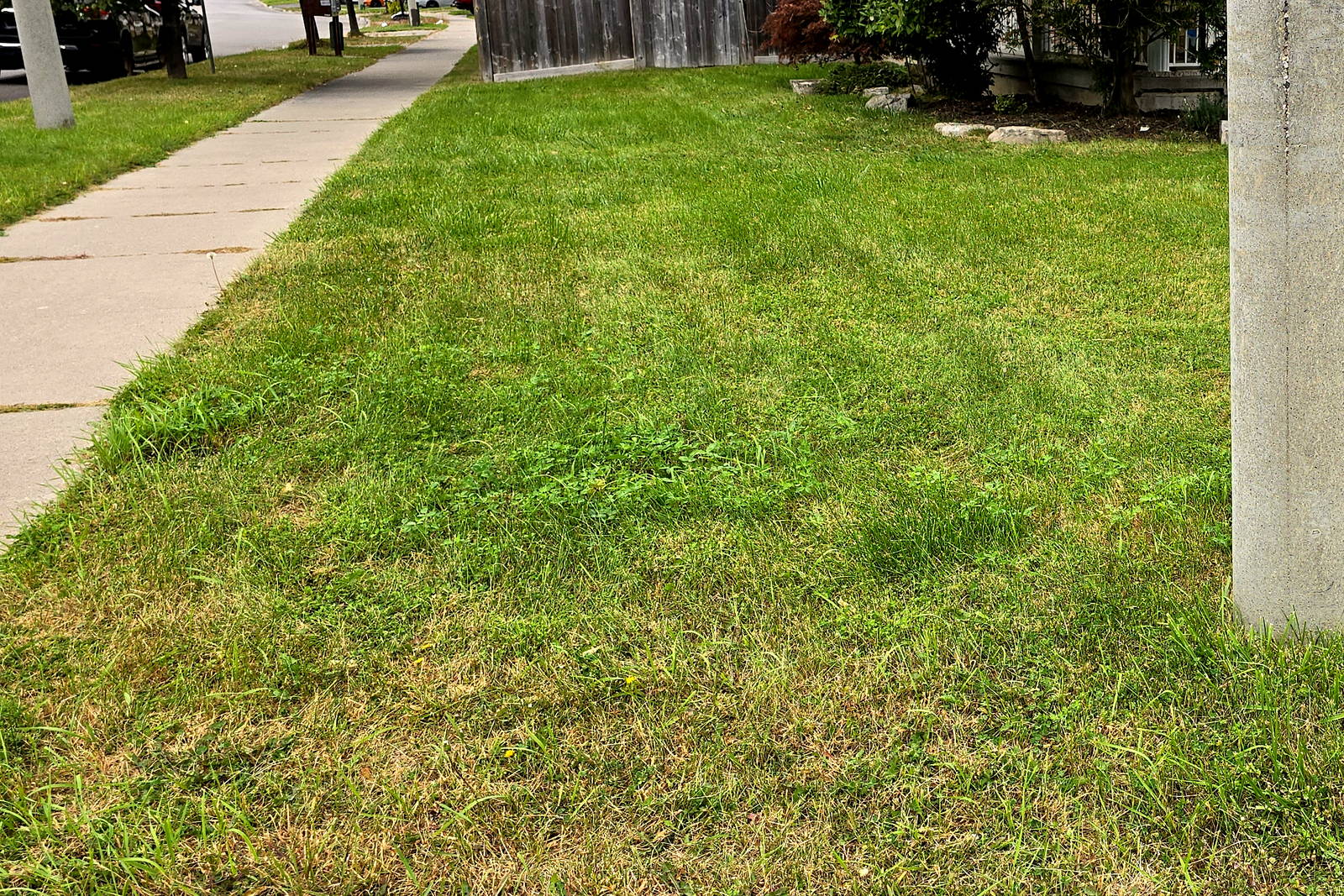
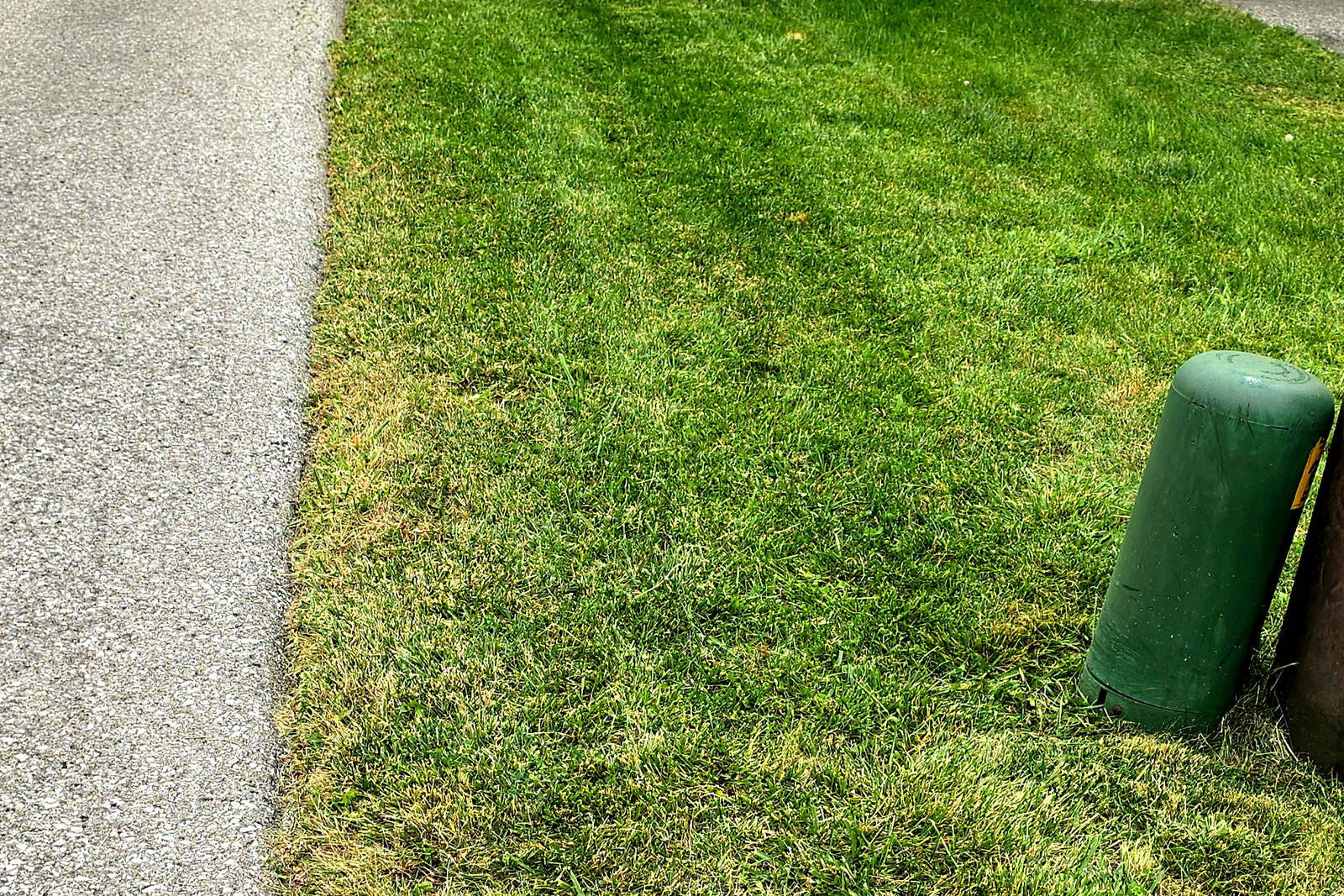
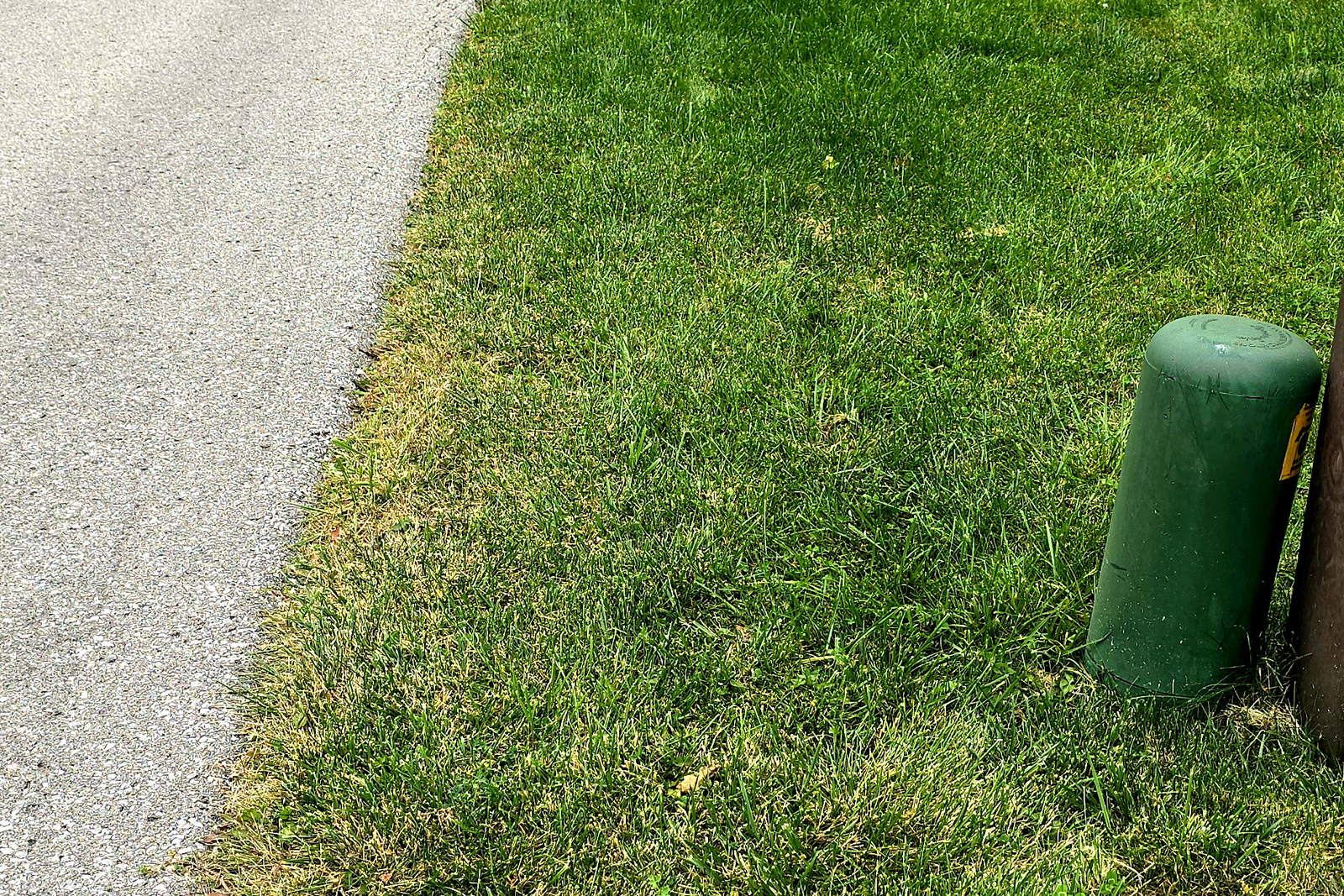
Real Northline properties, before and after, every one of them in Oshawa and every one of them this year. Drag the line to compare.
Andrew answers, October 2026
Why is the morning clearing time a target rather than a promise?
Because a promise about the morning is a promise about the weather, and nobody can make one of those honestly. What I can promise is where you sit in the route and the order the route runs in, and both of those are published on this site. In eighteen years of Oshawa data the worst winter had twenty four clearing days and the mildest had four, and a promise written to survive the worst of those is a promise priced for it. A target I actually hit is worth more to you than a promise I have quietly priced the risk of breaking.
One of these goes on each page and it is replaced monthly. If the question you have is not here, ask it: 905-244-5779.
Tell me the address and the hour the car has to leave
Those two things price an Oshawa driveway more accurately than a photograph does. If you qualify for the City program I will say so and the conversation ends there. If you do not, the seasonal number and the membership number will both be in front of you before November 1, which is when the route closes for the winter.