Snow removal · Ice
Freezing Rain in Durham Region, and the Winter Event Where Every Tool Reverses
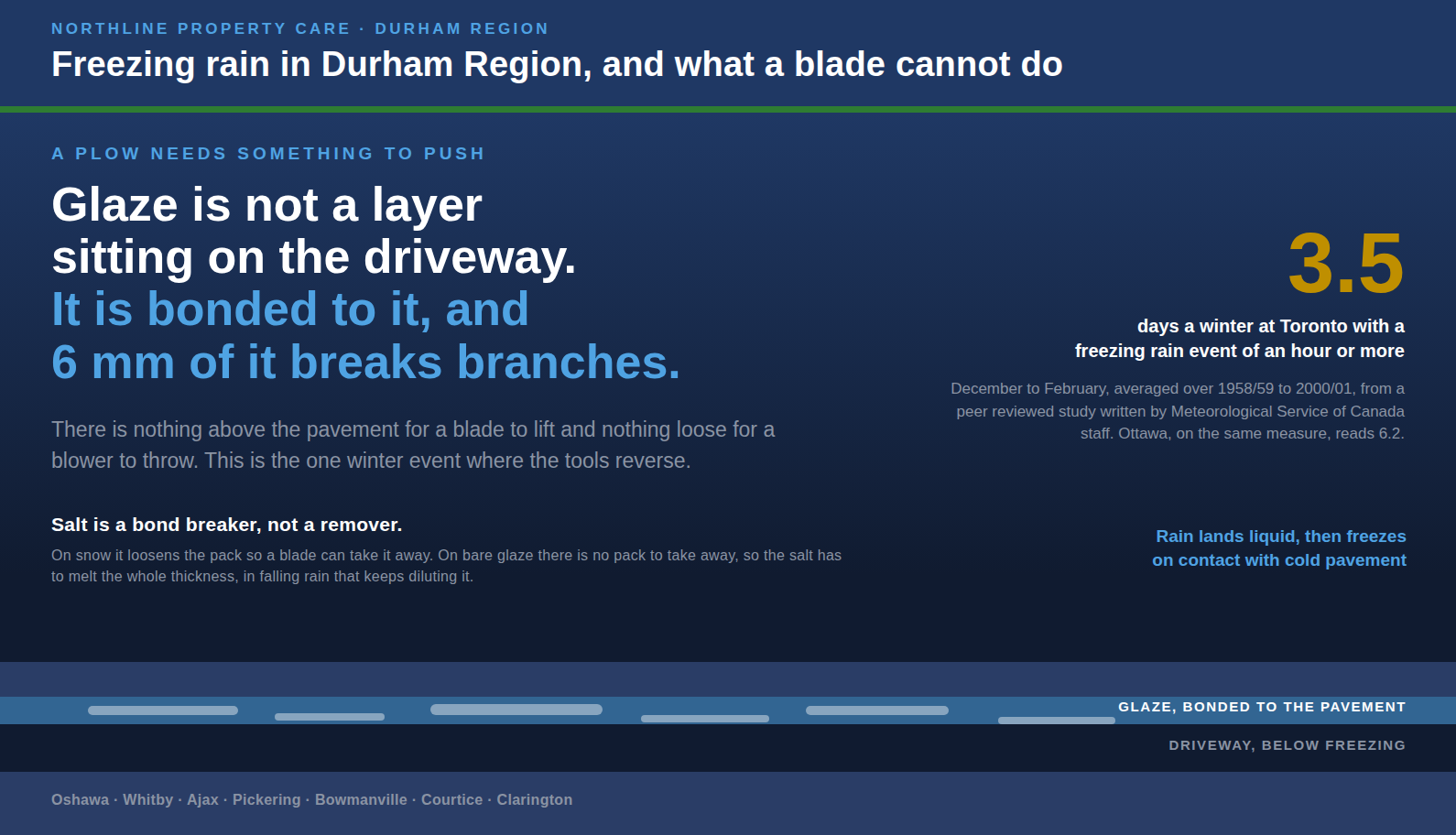
Freezing rain in Durham Region is the one winter event a plow cannot fix, because there is nothing on the driveway to push. It bonds to the pavement as a sheet, and the only thing that helps while it falls is traction.
What the trigger depth actually buys. See how the winter route works.
Green in summer. Clear in winter.
The short answer
During freezing rain, sand the driveway for grip and leave the clearing until the temperature comes back up. A blade needs depth to work and glaze has none. Salt still breaks the bond, but it has to melt the whole thickness instead of loosening a pack, and the rain that is still falling keeps diluting the brine it makes. Brine laid down before the event is worse than useless, which is the part almost nobody knows.
If ice rather than snow is the thing that worries you about your property, that is a tier question before it is a service question, and it is worth reading the salting section below before you choose one.
One temperature profile, four completely different winters
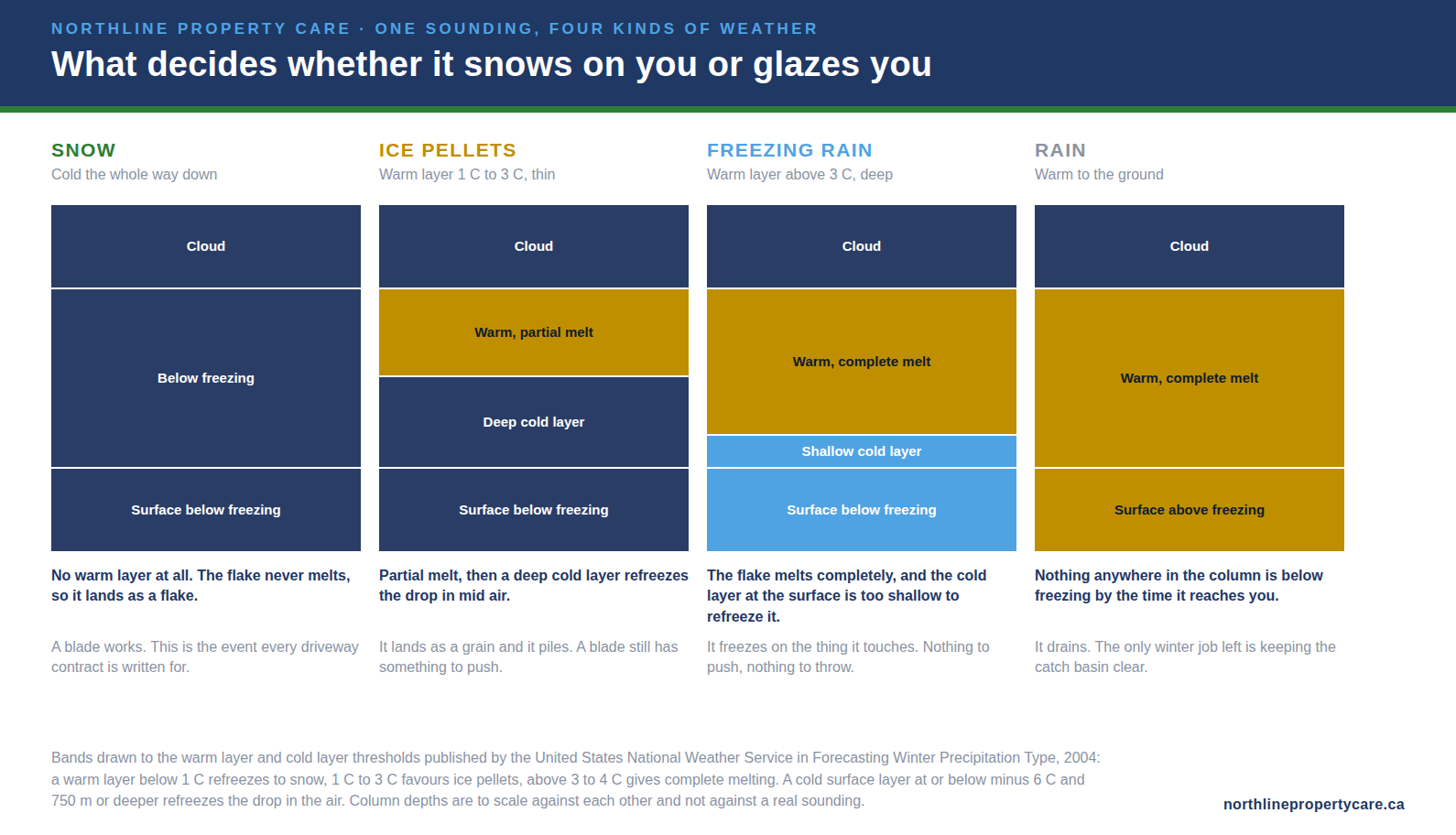
Freezing rain is not a kind of precipitation that forms in the cloud. It is a snowflake that had an accident on the way down. Everything that falls on Durham between November and April starts as a snowflake somewhere above you. What decides whether it reaches your driveway as snow, as ice pellets, as freezing rain or as rain is nothing more than the temperature at four or five heights in the column of air between the cloud and your garage door.
Researchers at the Meteorological Service of Canada put the requirement plainly in a peer reviewed paper on how freezing rain is likely to change in this part of the country: it needs an above freezing layer in the atmosphere and a below freezing layer near and at the surface. Two layers, in that order, with the warm one on top. That is the whole recipe, and it is why freezing rain feels like it comes out of nowhere. The surface temperature on your own thermometer tells you almost nothing about which of the four you are about to get.
The United States National Weather Service publishes the thresholds a forecaster actually uses, in a training review on forecasting winter precipitation type, and they are tighter than most people expect. A warm layer whose maximum temperature stays under 1 degree Celsius barely melts the flake and it refreezes to snow. Between 1 and 3 degrees you get partial melting, which favours ice pellets. Above 3 to 4 degrees the flake melts completely, and from that moment the only question left is whether the cold layer at the surface is deep enough to refreeze the drop before it lands.
That last clause is where Durham lives. If the cold surface layer is about 750 metres deep or more and gets down to minus 6, the drop refreezes in mid air and you get ice pellets, which pile up like coarse sugar and which a blade can still move. If the cold layer is shallow, the drop stays liquid the whole way down and freezes on the first thing it touches. Same storm, same cloud, same melting aloft. A few hundred metres of difference in one layer, and you get either a driveway that can be cleared or a driveway that cannot.
How often this actually happens here, and the claim we are not going to make
Plenty of winter writing treats the north shore of Lake Ontario as an ice belt. We went looking for evidence of that and found the opposite, so here is the honest version rather than the flattering one.
The Meteorological Service of Canada paper above counted freezing rain days at Canadian airports from the winter of 1958 to 1959 through to 2000 to 2001. Toronto, which is the nearest long record station to Durham with published counts, averages about 3.5 days a winter with a freezing rain event lasting an hour or more, about one day a winter with an event of four hours or more, and about half a day a winter at six hours or more. Ottawa on the same three measures reads 6.2, 2.6 and 1.5. Durham gets roughly half of what the Ottawa Valley gets.
A more recent peer reviewed study of near zero surface temperature and precipitation type patterns across Canada puts the Canadian freezing rain maxima in Atlantic Canada, at 36 to 42 hours a year, and around Montreal at 20 to 24 hours a year. Southern Ontario is not in that company. So we are not going to tell you that Oshawa is a freezing rain capital. It is not.
What is true is more useful than that. Frequency here is moderate and consequence here is high, and those are two different numbers. Durham is dense, it is heavily treed in the older neighbourhoods along Simcoe, Centre, Dundas and King, and most of the people living in it drive to work on somebody else's schedule. An event that happens three times a winter and shuts the morning down is not a rare event in any way that matters to a homeowner standing at the top of their driveway at six in the morning.
Look at where the ice actually landed in the most recent big one. In its summary of Canada's top ten weather stories for 2025, Environment and Climate Change Canada records the storm of March 28 to 31, 2025 with accumulations of 15 millimetres at Barrie, 19 at Orillia, 20 at Peterborough and 25 at Lindsay, and as many as 380,000 customers without power across Ontario at once on the afternoon of March 30. Every one of those named places is inland and north of the lakeshore. The lake edge is usually the mild margin of these storms and the upland north of Taunton is usually the heavy side, which is a pattern in the record rather than a measurement anybody has published for Durham specifically.
Why the blade stays on the truck
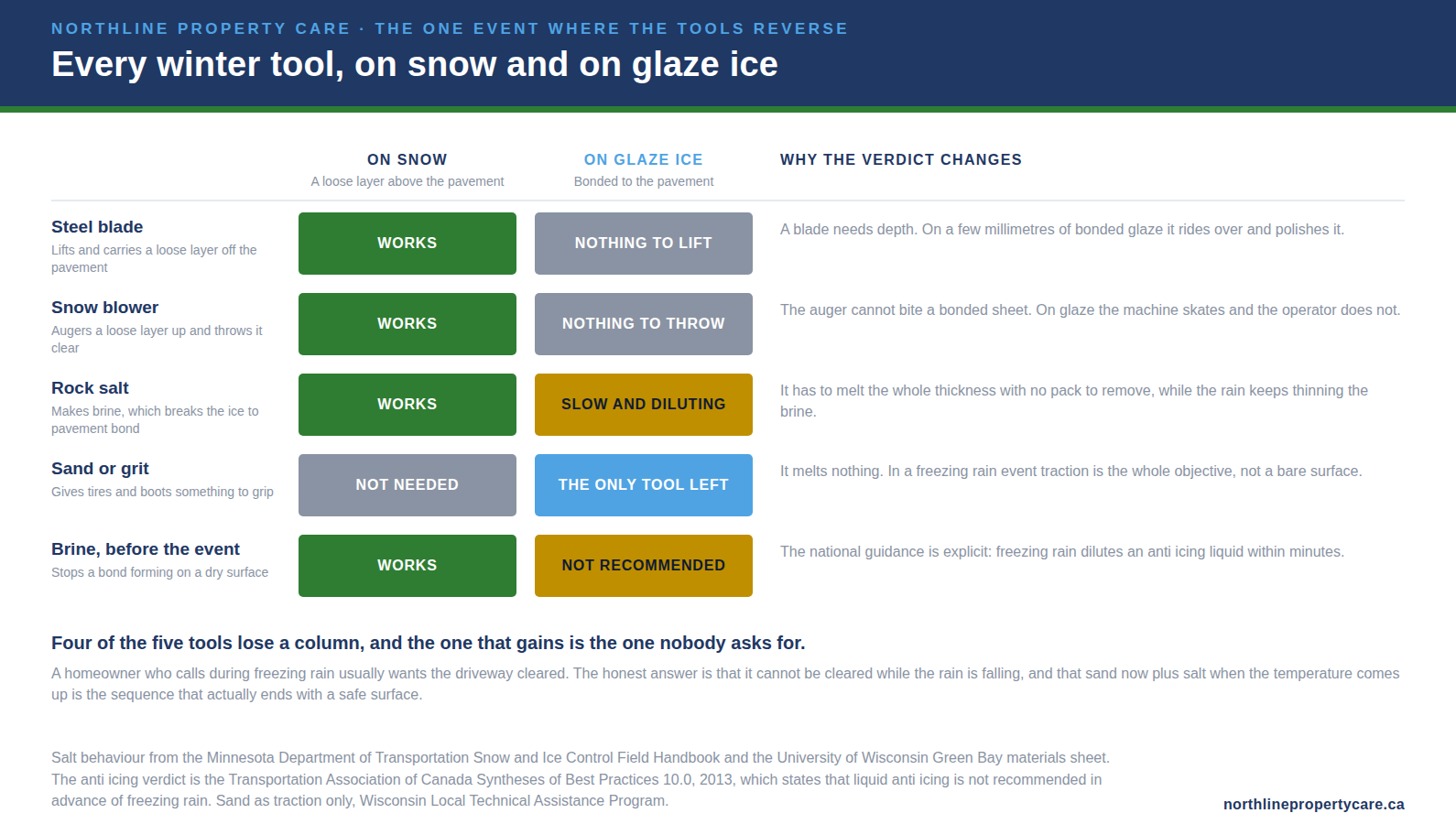
A plow blade is a lifting device. It gets under a loose layer, carries it sideways and leaves it somewhere else. Everything about a driveway contract, including ours, assumes there is a loose layer. Glaze ice is not a loose layer. It froze in place, in contact with pavement that was already below zero, and the bond between the two formed at the moment of contact rather than building up over hours of traffic.
Put a cutting edge on that and one of two things happens. Either the blade rides straight over the top and burnishes the surface into something smoother and more dangerous than it was, or the edge catches a high spot and the truck loses its footing before the ice does. Neither outcome is worth the trip, and the second one is how driveways and vehicles get damaged.
A snow blower fails for the same reason wearing a different hat. The auger is designed to bite into a layer and feed it to the impeller. There is nothing to bite. What usually happens is that the machine stays put and the person behind it does not, which is the single most common way people get hurt on their own property during an ice event.
So the tools do not simply get less effective in freezing rain. They invert. The one that is nearly useless in a snowfall, sand, becomes the only one that does anything at all.
What salt is actually doing, and the point at which more of it does nothing
Salt does not melt ice in the way most people picture it. The University of Wisconsin Green Bay states the mechanism in one line on its own materials sheet: a chemical de icer loosens the bond between the ice and the pavement so that the ice can then be physically removed. Salt is a bond breaker. On snow that is an excellent division of labour, because the salt breaks the bond and the blade does the removing.
On bare glaze there is no removing step. There is no pack to take away, so the salt has to melt the full thickness of the sheet by itself. That is a far bigger job than it looks, and three separate things make it harder.
The first is that dry salt needs liquid water before it can do anything. It has to go into solution and make brine, and until it does it is simply a scattering of white grains sitting on a hard, smooth, sloped surface. That is also why it bounces and rolls off a glazed driveway in a way it never does off snow. The Region of Durham puts brine on its own salt before spreading it for exactly this reason, and says on its regional road maintenance page that pre wetting helps keep the salt on the road instead of bouncing off.
The second is dilution. The Minnesota Department of Transportation handbook for plow operators states the limit in a sentence worth memorising: an ice control product will work until dilution causes the freeze point of the brine to equal the pavement temperature. In a freezing rain event the dilution is not a slow drift, it is the weather. More water keeps arriving, every minute, on top of the brine you just made.
The third is temperature. Sodium chloride has a practical working floor around minus 9 or minus 10 Celsius and the returns fall off a cliff before that. The same Minnesota handbook publishes the yield: one pound of salt melts 6.3 pounds of ice at minus 9, and only 3.7 pounds at minus 18. You are not adding a bit less performance as it gets colder. You are losing most of it.
For what it is worth, the City of Pickering tells its own residents the same thing on its snow safety page, stating that salt is most effective when the road temperature sits between zero and minus 10, and that gravel roads are sanded rather than salted because salt would draw out the frost.
How much salt a driveway actually needs
Far less than most people throw at it. The Transportation Association of Canada publishes a parking lot application table by pavement temperature in its road salt best practice synthesis, and the numbers come out, in metric, at roughly 15 grams per square metre just below freezing, 24 grams between minus 1 and minus 4, and 39 grams between minus 9 and minus 15. A two car driveway of about 50 square metres is therefore somewhere around three quarters of a kilogram of salt on a mild day. Most people put down four or five times that, which buys no extra melting, costs money, pits the concrete and runs into the storm sewer at the bottom of the street.
That matters more in this province than people assume. Road salts were assessed under the Canadian Environmental Protection Act and the assessment report, published December 1, 2001, concluded that road salts pose a risk to plants, animals and the aquatic environment. They were never added to Schedule 1, and what exists instead is a voluntary code of practice that applies only to organizations using more than 500 tonnes a year. Driveways and private walkways are explicitly outside it. Nobody is coming to audit your garage, and that is precisely why the restraint has to be voluntary.
The counterintuitive one: do not lay brine ahead of freezing rain
Anti icing is the practice of treating a dry surface before a storm so that a bond cannot form in the first place. It is genuinely excellent, it is what the Region of Durham is doing when you see a truck striping wet lines down Taunton Road under a clear sky, and it is the single highest value winter tactic there is. For frost. For black ice. For the leading edge of a snowfall.
For freezing rain it is the wrong tool, and the national guidance says so outright. The Transportation Association of Canada's best practice synthesis on salt use for private roads, parking lots and walkways states that liquid anti icing is not recommended in advance of freezing rain or sleet, because within minutes the precipitation will dilute the anti icing liquid to the point where it is no longer effective. Minnesota's anti icing guide reaches the same conclusion by a different route, advising against liquid anti icing for medium or heavy freezing rain.
Read Durham's own wording in that light and it lines up exactly. The Region says it applies brine when there is no winter storm, before winter weather, and when frost or black ice is likely. It does not say it applies brine ahead of freezing rain, and that is not an omission.
So if somebody offers to pre treat your driveway tomorrow afternoon because freezing rain is in the forecast for the evening, they are either selling you a service that the published guidance says will not work, or they have not read it. The useful version of the same instinct is to clear and dry the surface beforehand, make sure your downspouts are not discharging across the driveway, and have sand where you can reach it without walking on the thing you are trying to treat.
What the municipality does, and what it says you have to do yourself
Here is the gap that catches people. Municipal winter service is written around snow depth. Almost every published standard in Durham triggers on centimetres accumulated, which is a number a glaze event never produces.
The City of Oshawa is the one authority in the region that names ice directly in its own criteria. Its snow clearing page lists four conditions that can each trigger a significant weather event declaration, and two of them are about ice rather than snow: ice formation that occurs without warning from the weather forecast, and freezing temperatures when de icing operations will not be effective. A declaration suspends the normal timelines until the event is over.
The Town of Whitby is blunter still, and its sentence is the one to read twice. On its own windrow and sidewalk assistance page, the Town states that clearing ice formation is the responsibility of the homeowner, that the program covers sidewalk and windrow snow clearing only, and that salt or sand is not provided. If you qualify for municipal assistance in Whitby, that assistance does not reach an ice event.
Underneath all of it sits the provincial minimum. Ontario Regulation 239 of 2002 sets the floor for how quickly a municipality must respond, and for an icy sidewalk the standard is to treat it within 48 hours of becoming aware that it is icy. We could not read that regulation at source, so we are quoting two municipalities outside Durham that reproduce the table in their own public policies rather than the regulation itself. Either way, 48 hours is a long time to wait on a public sidewalk, and it is the reason the private half of this matters.
Your own deadline is much shorter than the city's
Oshawa Winter Access By-law 92-2009 sets the owner's own deadline at midnight on the day after the weather stops. What it says has to have stopped is the part worth reading: the fall of snow, or, in the by-law's own phrase, any other precipitation which freezes. Freezing rain is named outright. The clock starts at the end of the event, not when you get home from work.
The second clause is the one people miss. If the sidewalk remains or becomes slippery after you have cleared it, the by-law requires the owner to apply sand, salt or some other suitable material, immediately and as often as necessary, so as to completely cover the slippery surface. In an ice event the clearing obligation and the traction obligation are two separate duties, and the second one does not end when the first is done.
The penalties are published and they escalate. Administrative penalties run $75 for a first violation, $175 for a second in the same calendar year and $275 for a third and each one after it, with the City able to invoice the cost of doing the work. Prosecuted in court the range is $300 to $5,000 for a first offence and higher for repeats. Ajax and Clarington both give owners 24 hours after a snowfall or ice forming. Whitby publishes 24 hours as well.
| Municipality | Your own deadline | What it names |
|---|---|---|
| Oshawa | Midnight on the day after the weather stops | By-law 92-2009 names both snow and precipitation which freezes, then separately requires sand or salt until the slippery surface is covered |
| Whitby | 24 hours following a snowfall | Owners must clear ice and snow from bordering sidewalks. The Town states that clearing ice formation is the homeowner's responsibility and that salt and sand are not provided |
| Ajax | 24 hours after a snowfall or ice forming | Ice is named directly in the Town's own winter response wording |
| Pickering | Published through the Ice and Snow Clearing By-law 6650/06 | Owner duties named include walkways, driveways, ramps, outdoor stairs and landings, and keeping catch basins clear |
| Clarington | 24 hours following a snowfall | Snow clearing by-law. Nothing ice specific is published |
Four of the five municipal pages above are written in terms of a snowfall. One ice event, with no measurable snow at all, leaves a homeowner holding a duty that the published trigger does not obviously describe, and the safest reading is the Oshawa one: the clock runs from the end of precipitation that freezes, whether or not anything accumulated.
The millimetres that break branches, and the ones that do not
Most of the damage an ice storm does to a Durham property is not to the driveway. It is overhead, and the thresholds are surprisingly precise.
The United States Forest Service published a review of hardwood crown injury after ice storms, and it gives the bands plainly. Smaller branches begin to break at roughly 6 to 13 millimetres of accumulated ice. Half an inch to an inch of clear ice, which is about 13 to 25 millimetres, causes what the review calls conspicuous breakage. Some storms have reached 76 millimetres and more. The review also records the detail that makes the arithmetic real: in the storm of January 1998, the coating of clear ice on some twigs reached between 16 and 159 times the normal weight of the twig.
Hold those bands against the two storms people here actually remember. The December 21 to 22, 2013 storm put about 30 millimetres on southern Ontario, which is above the conspicuous breakage band. The March 2025 event reached 25 millimetres at Lindsay, which is right at the top of it. The City of Toronto's own staff review of the 2013 response recorded roughly one million residents without power at the peak and estimated the City's costs at $77.2 million excluding the utility, lost revenue and tree replacement.
The species that fail first are the ones Durham's older streets are full of. The Forest Service review names oak and American beech as the most susceptible among main canopy trees, with aspen, birch, black cherry, maple and white ash in the heavily damaged group. If you have a mature silver maple leaning over the driveway, the ice event is the one to take seriously, not the snowfall.
And the one piece of safety advice that is worth more than everything else on this page: if a line is down, stay at least 10 metres away from it, which is about the length of a school bus, and assume the ground around it is live. That is the figure the local distribution utility publishes, and it does not change because the line looks dead.
The unprofitable part, said plainly
There is a window in the middle of a freezing rain event when nothing anybody does will make your driveway safe. Not us, not the city, not a bag of salt from the hardware store. The rain is still falling, the pavement is still below zero, and every treatment you apply is being diluted while you apply it. The honest advice for that window is to stay off it, park on the street if the street is treated, and not drive unless you have to.
Saying that costs us a visit, and it is still the right answer. A contractor who turns up during the event and runs a blade over glaze has taken your money for a trip that made the surface smoother. A contractor who dumps forty kilograms of salt into falling rain has sold you a bag of salt and a storm sewer problem. The useful sequence is sand first for grip, then salt once the precipitation has stopped and the temperature is on the way up, then clearing if anything accumulated on top.
The second unprofitable thing is about our own tiers, and you should hear it from us rather than find it out in February.
Silver, at $129 a month plus HST, carries no salting at any depth. It is a membership with a winter walkway and windrow component, and it is good value for what it is. It is the wrong product for somebody whose actual worry is ice. The tier built around that worry is Platinum at $279 a month plus HST, where the salting is automatic, unlimited and tied to a 6:30 AM target. Gold at $189 a month plus HST sits in between, and it is the right answer where getting the car out matters more than the surface underneath it.
We would rather lose the Silver sale and keep the customer than sell the cheap tier to the one person it does not suit.
And a third, because it belongs in the same section. If what you want is one visit after one bad night, a salt only trip is $25 and you do not need a membership to buy one. For a lot of households that is the correct answer and we will say so on the phone.
What we actually do when the forecast says ice
The residential trigger is three centimetres of measured accumulation, which is a depth rather than a forecast. A pure glaze event does not reach it and never will, so a freezing rain night is not a clearing night. What it is instead is a salting and sanding night for the tiers that carry it, and the sequence is the same every time.
Before the event, the surface gets cleared and dried if there is anything on it, because glaze bonding to bare pavement is easier to break than glaze bonding to a compacted layer underneath it. During the event, traction material only, concentrated on the slope and on the walk to the door rather than spread evenly across a surface nobody is going to drive on. After the precipitation stops, salt at the published rate, once, timed to when the pavement temperature is climbing back toward zero rather than when it is at its lowest.
Then, if the event left ice pellets or snow on top of the glaze, that layer gets cleared the way any other accumulation does. That is usually the order a long storm runs in anyway. The March 2025 event at Toronto, as Environment and Climate Change Canada recorded it for 2018 in similar terms, is the shape of the thing: hours of ice pellets, then hours of freezing rain, then hours of plain rain, all from one system.
For the properties on long laneways and acreage out toward Solina, Enniskillen and Tyrone, the arithmetic changes again, because the amount of surface to treat is three or four times a subdivision driveway and the nearest treated road may be a Regional arterial a kilometre away. That is a conversation worth having before November rather than during an event.
What we could not verify
Every outside figure on this page was read off a federal agency, a provincial ministry, a municipal by-law, a university or a peer reviewed journal. None of it came off a rival's price page, which is a rule we keep because a competitor is not a source. What follows is the opposite list: the things we went hunting for and did not get.
- A freezing rain hour count for Oshawa itself. The Environment and Climate Change Canada climate normals host would not answer for us on the day we wrote this. Every figure in the frequency section above is for Toronto or Ottawa, from a published study, and neither is Durham.
- Ontario Regulation 239 of 2002 at source. The provincial e-laws page renders through a script we could not read. The 48 hour icy sidewalk standard is quoted from two municipalities outside Durham that reproduce the table in their own policies, and the section numbering is theirs rather than ours.
- Current Environment and Climate Change Canada warning thresholds for freezing rain. There are none to quote. The agency has replaced its published numeric criteria with impact guides, so anybody still quoting an hours based freezing rain warning threshold is quoting a retired standard, and we are not going to join them.
- A measured temperature difference between the lakeshore and the high ground north of Taunton. We looked for this in government and university sources because it is the obvious local mechanism, and found nothing published. The inland pattern in the 2025 accumulations is a pattern, not a gradient anybody has measured for Durham.
- Any Durham municipality declaring a significant weather event specifically for ice. Every declaration we could find and read names snow, or names no precipitation type at all. The ice criteria exist in Oshawa's published list. We could not find an occasion where they were used.
- Durham specific outage counts for any ice storm. The figures above are Ontario wide, from the federal agency. Nobody publishes a Durham number that we could reach.
One more, and it is about this page rather than about the weather. The ice accretion figures in the tree section are American forestry research, because the Canadian design values that exist are inside paid standards we did not buy. The bands are physical rather than national, and a branch in Bowmanville fails under the same load as a branch in Vermont, but it is a borrowed source and you should know that it is.
Questions people in Durham actually ask
Can you plow my driveway during freezing rain?
No, and no honest contractor can. Glaze ice is bonded to the pavement rather than resting on it, so there is nothing for a blade to lift. Running one over the surface either rides straight over the top and polishes it or catches an edge and costs you a driveway. What we can do during the event is put traction material down, and what we do after it is salt once the precipitation has stopped and the temperature is climbing.
Should I put salt down before freezing rain starts?
Not liquid brine, and the national guidance is explicit about it. The Transportation Association of Canada states that liquid anti icing is not recommended ahead of freezing rain, because the precipitation dilutes it to the point of uselessness within minutes. Brine is excellent before frost, before black ice and before a snowfall. Before freezing rain it is money on the ground. Clearing and drying the surface beforehand is worth far more.
Does the city clear ice from the sidewalk in front of my house?
No. Oshawa gives the owner until midnight on the day after the weather stops, under Winter Access By-law 92-2009, and that same by-law adds a second duty: sand or salt, as often as necessary, until the slippery surface is covered. Ajax and Clarington both publish 24 hours. Whitby states in writing that clearing ice formation belongs to the homeowner and that its assistance program supplies no salt and no sand.
How much salt should I actually put on my driveway?
Around 15 grams per square metre just below freezing, rising to about 39 grams per square metre between minus 9 and minus 15, using the application table the Transportation Association of Canada publishes for parking lots. On a typical two car driveway that is well under a kilogram on a mild day. Beyond that you are not melting more ice, you are buying pitted concrete and a chloride problem in the creek at the bottom of the hill.
At what temperature does salt stop working?
It becomes uneconomic rather than impossible. The practical floor for ordinary rock salt is around minus 9 to minus 10 Celsius, and the yield falls fast on the way there: the Minnesota transportation handbook puts it at 6.3 pounds of ice melted per pound of salt at minus 9, and 3.7 pounds at minus 18. Below that the right material is sand, which melts nothing and simply gives you something to stand on.
How much ice does it take to bring branches down?
Smaller branches start breaking at about 6 to 13 millimetres of accumulation and conspicuous breakage begins between 13 and 25 millimetres, according to a United States Forest Service review of ice storm crown injury. The December 2013 southern Ontario storm put about 30 millimetres down, which is above that band. If a line comes down, stay at least 10 metres from it and treat the ground around it as live.
Who wrote this
Andrew owns Northline Property Care, prices the properties himself and then goes out and does the work, fully insured, across Oshawa, Whitby, Ajax, Pickering, Bowmanville, Courtice and Clarington. Six winters of Durham ice and snow sit behind the sequence set out above. Those winters are his, personally, and they are not a claim about how long the company has traded.
This page exists because ice nights produce the difficult phone calls, and nearly all of them start from an entirely fair assumption: that a driveway service clears driveways. It does, on any night with something to clear. Where a figure here was taken from somewhere else, the link beside it goes to the page we read it on, and the things we could not confirm sit in their own section instead of vanishing. Spot an error anywhere above and 905-244-5779 reaches the person who wrote it, which is quicker than any correction form.
Read next
When salt stops working
The temperature floor, the alternatives below it, and what chloride actually does to concrete, interlock and the creek at the bottom of the street.
Read the salting guide →What a plow can and cannot damage
Which driveway damage is genuinely caused by a blade, which is frost heave that was going to happen anyway, and how to tell the two apart in April.
Read the damage guide →Where the plow actually is
Every municipal tracker and activity report in one place, beside the live warning state, so you can see what the city is doing before you call anybody.
Open the tracker index →The work, photographed
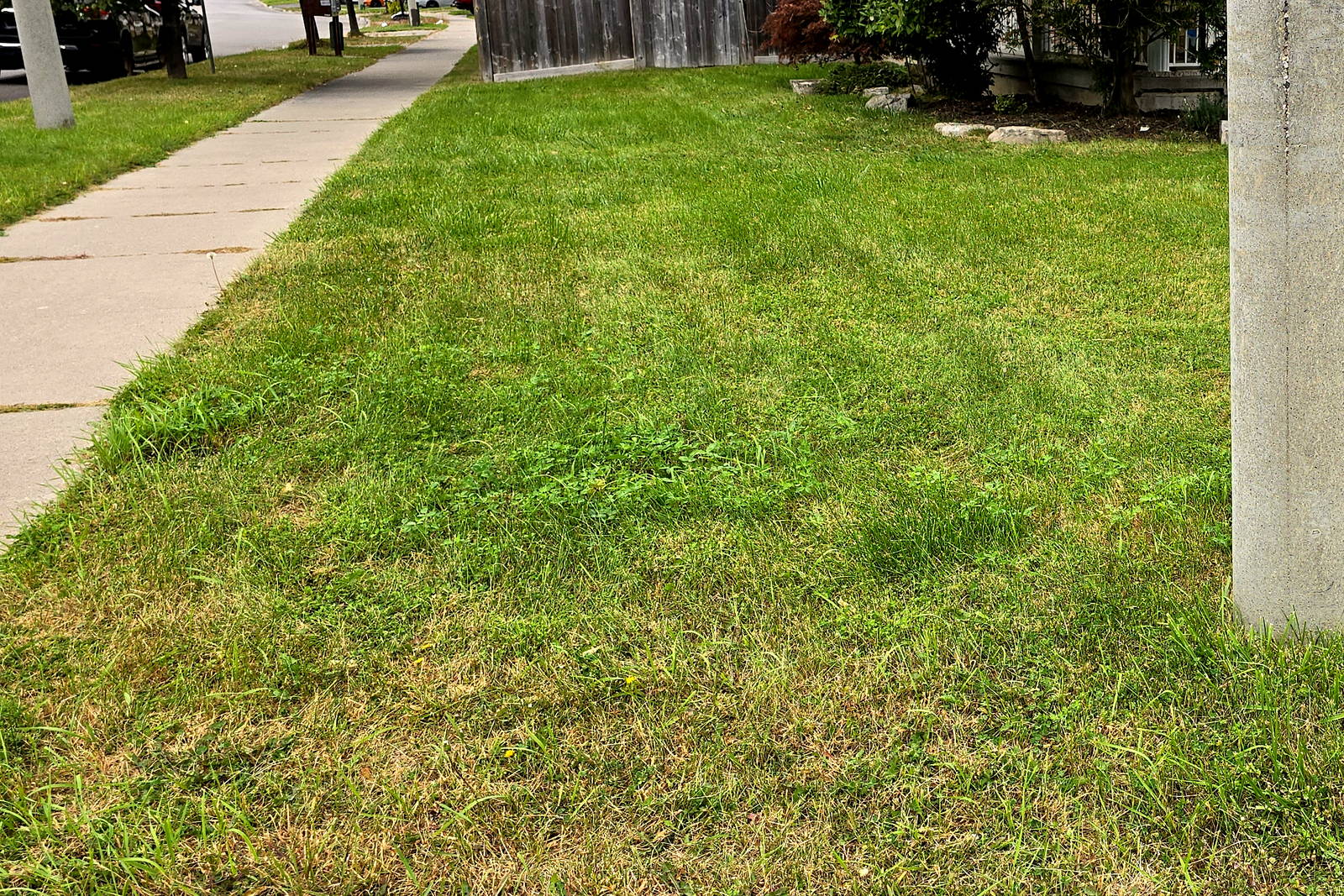
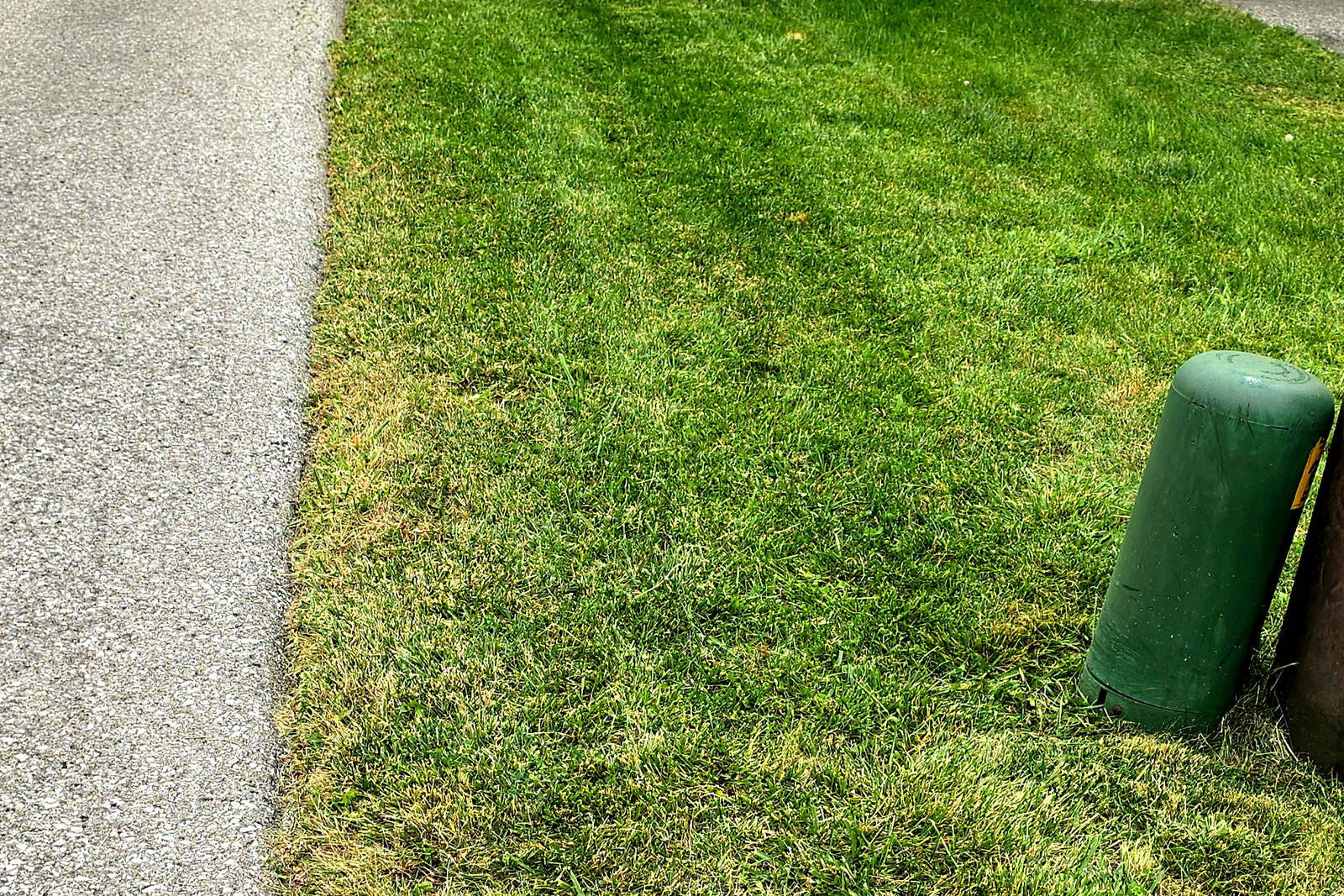
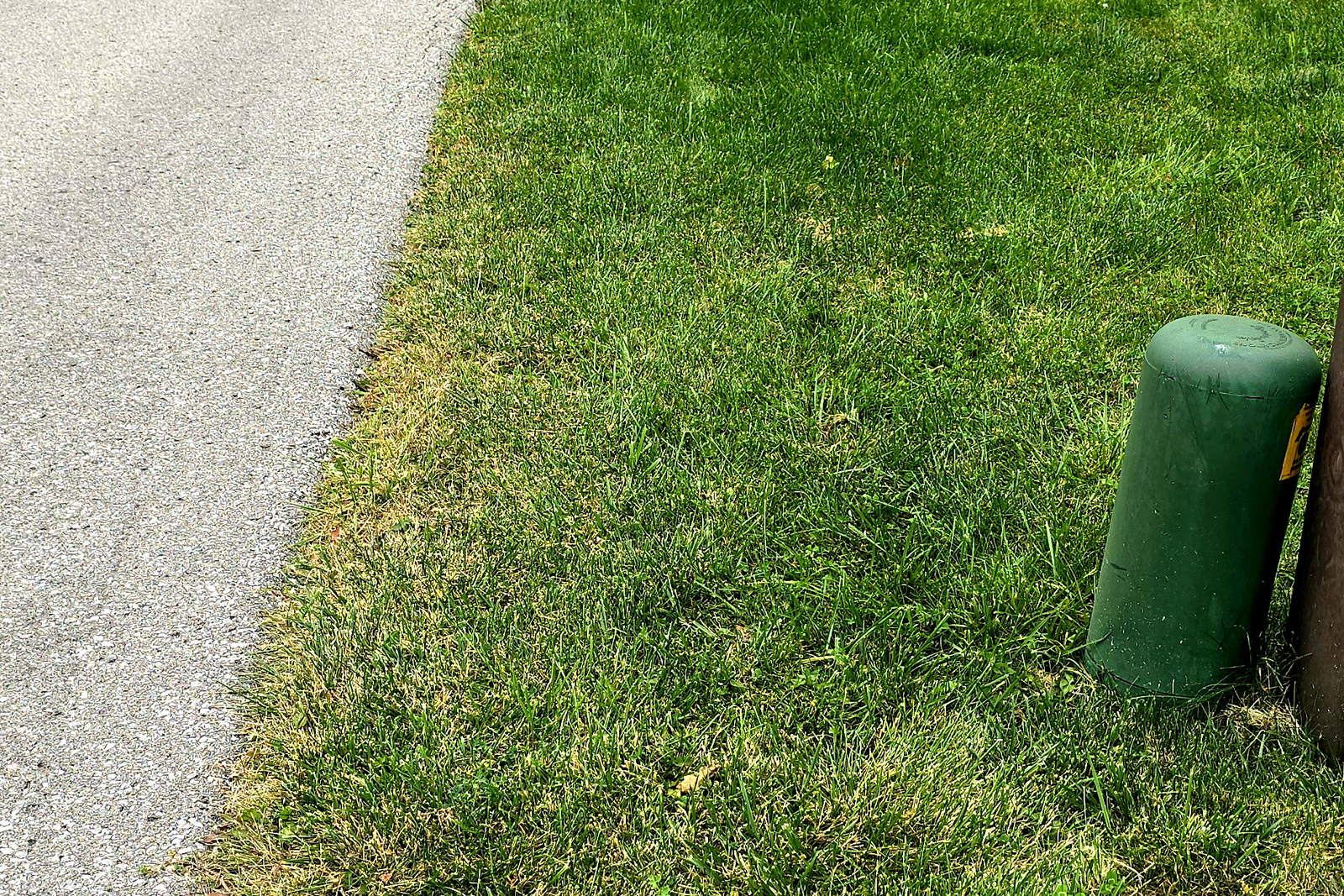
Real Northline properties, before and after, every one of them in Oshawa and every one of them this year. Drag the line to compare.
Andrew answers, October 2026
Is the 3 cm trigger measured at my house or somewhere else?
On the route, not at an airport. Three centimetres is the depth at which a residential driveway stops being something you can drive out of, so that is where the number is set. Below it we are still out, but it is salt and the walkway rather than the blade, and that happens without you asking for it.
One of these goes on each page and it is replaced monthly. If the question you have is not here, ask it: 905-244-5779.
Tell me what you are actually worried about
Send me your address and say whether it is the snow or the ice that bothers you, and I will tell you which tier matches that answer. If it is a single bad morning once a winter, I will tell you to buy a salt trip instead of a membership.